
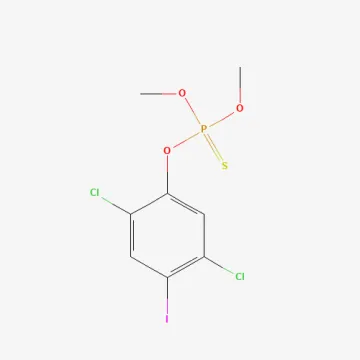
Iodofenphos
Description
Mode of action
Iodofenphos belongs to the organophosphorus class of chemical compounds and acts as a potent contact and stomach insecticide with secondary acaricidal properties.
Its primary mode of action is the inhibition of the enzyme acetylcholinesterase, which is essential for the normal functioning of the nervous system in insects and mites.
By preventing the breakdown of neurotransmitters, the substance leads to rapid paralysis, muscle tremors, and eventual death of the target organism.
The compound is absorbed through the insect cuticle or ingested, providing a dual pathway for neutralizing pests on treated plant surfaces.
It remains stable on surfaces for a significant period, offering residual activity that helps to prevent rapid re-infestation of crops after initial treatment.
What it targets
This substance is effective against a broad range of agricultural and stored-product pests, including various biting, chewing, and sucking insects.
Common targets include:
- aphids and other sap-sucking insects;
- beetles and their larvae that damage foliage;
- spider mites on various vegetable crops;
- pests in granaries, including moths and weevils.
Beyond crop protection, the compound has historical use in livestock management to control external parasites like lice and flies.
Its versatility makes it useful in integrated pest management programs where multiple types of pests need to be controlled simultaneously.
Iodofenphos is particularly valued for its quick knockdown effect in settings where immediate suppression of pest populations is required.
Rates and timing
Application rates are determined by the specific crop, the type of pest, and the severity of the infestation, ensuring maximum efficacy while minimizing chemical load.
For structural and storage pest control, dosage is calculated based on the surface area and volume to ensure a uniform protective layer.
Adherence to pre-harvest intervals is mandatory to ensure that pesticide residues remain within safe limits for consumers and livestock.
Treatments should be applied under optimal weather conditions, avoiding high winds that could cause drift and ensuring uniform coverage.
Strategic scheduling of applications helps in maintaining crop health throughout the growing season without over-applying chemical inputs.
Restrictions
Iodofenphos is toxic to humans and animals; therefore, personnel must wear full personal protective equipment during handling and application.
The substance is highly toxic to bees and aquatic life, necessitating strict buffer zones near water bodies and avoiding applications during peak pollinator activity.
Proper waste management for pesticide containers is essential to prevent soil and water contamination in the surrounding environment.
To mitigate the risk of resistance, it is advised to rotate iodofenphos with insecticides that possess different modes of action.
Storing the product in a cool, dry, and secure location is critical to maintain its stability and prevent accidental exposure to non-target areas.
Status in the European Union
Not approved in the EU
- CAS number
- 18181-70-9
- Category (EU)
- IN - Insecticide
EU status is for reference only and does not replace national registration in your country.