
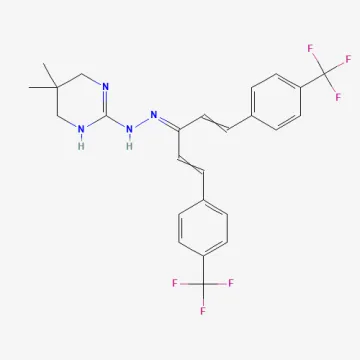
Hydramethylnon
Description
Mode of action
Hydramethylnon belongs to the amidinohydrazone chemical class. It is a specific insecticide characterized by a delayed-action effect, which is critical for the effective control of social insects.
The mechanism of action is based on the inhibition of cellular respiration. The substance blocks the mitochondrial complex responsible for ATP synthesis, which is the primary source of energy for insect cells.
As a result of this metabolic failure, insects stop producing energy, leading to paralysis and death within a few days after contact or ingestion of the bait.
Due to the delayed effect, worker insects have enough time to transport the poisoned bait back to the nest, distributing it among other individuals, larvae, and the queen, which leads to the elimination of the entire colony.
The substance possesses virtually no repellent properties, so insects readily consume the bait without suspecting any danger, which significantly increases the overall effectiveness of the treatment.
What it targets
The primary purpose of hydramethylnon is the destruction of pests from the order Hymenoptera and Blattodea. It is most frequently used to control various ant species, including fire ants.
The product successfully suppresses cockroach populations in indoor environments where strict sanitary regulations require the use of human-safe forms such as gels or granules.
The compound is also effective against termites that damage wooden structures in agricultural buildings and storage facilities.
In field conditions, the agent is used for perimeter protection around agricultural lands to prevent the migration of harmful insects into crop areas.
Using the substance against household pests allows for significant reduction in losses from grain spoilage and other agricultural products in warehouses.
Rates and timing
Application rates for hydramethylnon vary depending on the product form and the target pest. It is generally used in the form of ready-made baits, where the active ingredient content does not exceed 1-2%.
When controlling ants, granules are scattered around anthills or along insect trails. It is important to follow the manufacturer's recommendations regarding the quantity of granules per square meter to achieve maximum efficiency.
In enclosed spaces, the hydramethylnon gel is applied in dots at the locations with the highest concentration of cockroaches. Re-treatment is typically conducted after a few weeks to assess the population status.
The duration of the product's effectiveness depends on environmental conditions: in high humidity or direct sunlight, the bait may lose its attractiveness faster and require replenishment.
To prevent insect resistance to the product, it is recommended to rotate it with insecticides from other chemical groups if a long-term control strategy is planned.
Restrictions
Hydramethylnon is a moderately toxic compound to mammals; therefore, its use requires strict adherence to personal protective measures, especially when handling concentrated formulations.
It is strictly prohibited to apply the product directly to food products or surfaces that come into contact with food to prevent the toxin from entering the human body.
In agriculture, it is necessary to prevent access by pets and poultry to bait placement areas, as ingestion can cause severe poisoning.
The substance can be toxic to aquatic organisms; therefore, when used in open areas, avoid letting the product enter water bodies, drainage ditches, and sewage systems.
When working with hydramethylnon, protective gloves and clothing must be worn, and after completing the procedures, hands and face should be thoroughly washed with soap.
Status in the European Union
Not approved in the EU
- CAS number
- 67485-29-4
- Category (EU)
- IN - Insecticide
EU status is for reference only and does not replace national registration in your country.