
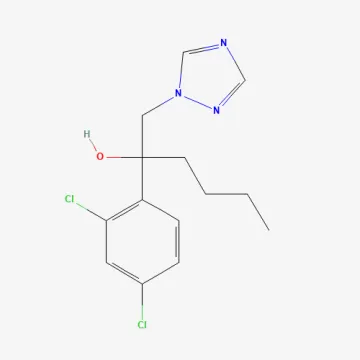
Hexaconazole
Description
Mode of action
Hexaconazole is a broad-spectrum systemic fungicide belonging to the triazole chemical class. Its primary mode of action involves inhibiting the biosynthesis of ergosterol, a vital component of fungal cell membranes, which halts pathogen growth.
The substance exhibits strong systemic properties, allowing it to be rapidly absorbed by the plant's tissues and translocated throughout the foliage. This movement ensures that both existing and new growth remain protected from fungal attacks.
Hexaconazole provides both preventative and curative control. It is particularly effective at stopping the progression of infections once they have already established, making it a reliable choice for integrated crop management.
Once applied, the fungicide remains stable and is relatively resistant to being washed away by rain, providing consistent protection under variable weather conditions. This reliability is crucial for long-term crop security.
Beyond its antifungal properties, hexaconazole helps maintain the plant's physiological health. By preventing leaf diseases, it allows the plant to maximize photosynthetic efficiency, ultimately contributing to better yields.
What it targets
Hexaconazole is used to combat a diverse range of fungal pathogens affecting cereal crops, fruit trees, and vegetables. It is highly effective against major classes of fungi, including Ascomycetes and Basidiomycetes.
- Powdery mildew
- Rust diseases (stem rust, leaf rust)
- Septoria leaf spot
- Apple scab
- Cercospora leaf spot in sugar beets
This fungicide is a key component in protecting wheat and barley from early and late-season leaf blights. It is also extensively used in orchard management to protect pome fruits and stone fruits from economically damaging diseases.
The systemic action allows it to penetrate dense foliage, reaching pathogens hidden inside the plant tissue. This is especially important for crops with complex leaf structures where contact fungicides might fail.
By effectively suppressing fungal activity, hexaconazole helps prevent the rapid spread of infections across large fields, protecting the plant's photosynthetic canopy throughout the critical development phases.
Rates and timing
Application rates for hexaconazole vary depending on the specific formulation, the target crop, and the severity of the infection. Typically, standard rates range from 0.2 to 0.5 liters of product per hectare.
The timing of application is critical for success. It is best applied preventatively at the onset of disease symptoms to prevent the pathogen from reaching epidemic levels in the field.
For cereal crops, applications are often scheduled during the booting or flag leaf stages to protect the most productive parts of the plant. In fruit orchards, timing is based on the critical periods for disease development during the growing season.
To avoid the development of resistant fungal strains, it is essential to rotate hexaconazole with fungicides that possess different modes of action. Continuous use of triazoles alone is strongly discouraged by agronomic standards.
High-quality spray coverage is necessary for the substance to perform optimally. Farmers must ensure that the spray volume is sufficient to coat the entire leaf surface uniformly.
Restrictions
Hexaconazole should be handled with standard personal protective equipment (PPE). It is generally classified as having moderate toxicity, but direct contact and inhalation should be strictly avoided.
Environmental precautions must be taken to prevent the product from entering waterways, as it can be toxic to aquatic life. Buffer zones near streams and ponds should always be maintained during spraying.
A mandatory pre-harvest interval (PHI) must be respected to ensure food safety. These intervals are specific to each crop and must be strictly followed according to the local label requirements.
Users should be aware that excessive use of triazoles can potentially affect crop growth regulation, so adhering to the maximum recommended dosage is vital to prevent any negative impact on plant development.
Before mixing with other pesticides or fertilizers, a compatibility test should be performed. Avoid mixing with highly alkaline substances, as this may neutralize the effectiveness of the active ingredient.
Status in the European Union
Not approved in the EU
- CAS number
- 79983-71-4
- Category (EU)
- FU - Fungicide
- ADI
- 0.005 mg/kg bw/day
EU status is for reference only and does not replace national registration in your country.