
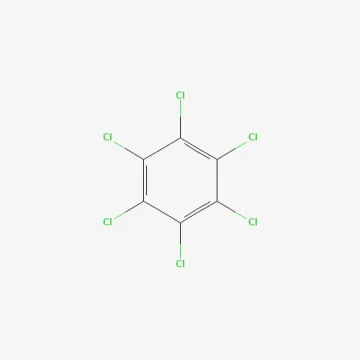
Hexachlorobenzene
Description
Mode of action
Hexachlorobenzene belongs to the group of organochlorine compounds and was historically used as a systemic fungicide. Its action is based on the ability to suppress metabolic processes of fungal pathogens, disrupting their respiratory cycles and cell membrane integrity.
The substance is characterized by extremely high persistence in the environment. It does not degrade in soil, possesses the ability for bioaccumulation in living organisms, and moves through food chains, which became the reason for the global abandonment of its use.
In past agronomic practice, hexachlorobenzene acted as a seed treatment agent. It created a protective barrier on the surface of the sowing material, preventing the infection of the embryo by fungi found in the soil or on the seed coat.
The mechanism of pathogen suppression was aimed at preventing spore germination and blocking mycelium development at early stages of crop growth. This ensured uniform emergence and reduced crop losses from root rot.
Due to high chemical stability, the molecule of the substance does not undergo rapid photolysis or hydrolysis. This means that even decades after application, residues of the preparation can be found in the soil profile in toxic concentrations.
What it targets
The main purpose of hexachlorobenzene was to control wheat bunt and other smut diseases of cereal crops. It effectively destroyed pathogens transmitted through seed material.
The substance was used to protect a wide range of cereal crops from a complex of seed-borne and soil-borne infections. Its spectrum of activity covered pathogens that showed resistance to less stable fungicides of that time.
In addition to smut control, the preparation acted on some types of seed molds that occur in conditions of excessive soil moisture. This allowed for improved field germination of seeds when sowing in cold soil.
The use of the preparation prevented the development of such dangerous pathogens as Tilletia species, which could lead to the loss of a significant portion of the harvest during storage and grain processing.
Currently, in agronomy, this active ingredient is considered solely as a historical example and an object of environmental monitoring due to its toxicology.
Restrictions
Nowadays, the use of hexachlorobenzene is banned or strictly restricted in all countries of the world by the Stockholm Convention on Persistent Organic Pollutants. Its use in agriculture is recognized as hazardous to human health and ecosystems.
When working with areas where this preparation was previously used, control of residual quantities in soil and products is mandatory. High toxicity requires strict safety measures during the reclamation of contaminated lands.
The substance has pronounced carcinogenic and teratogenic effects and is capable of causing disorders of the endocrine system and liver. Products containing traces of hexachlorobenzene are subject to immediate disposal.
The ban on use is due to its extremely long half-life. The substance belongs to the category of persistent organic pollutants capable of long-range transboundary transport by air masses.
Farmers are prohibited from using any preparations based on this active substance. Upon detection of residues, one should contact environmental control services to perform land decontamination.
Status in the European Union
Not approved in the EU
- CAS number
- 118-74-1
EU status is for reference only and does not replace national registration in your country.