
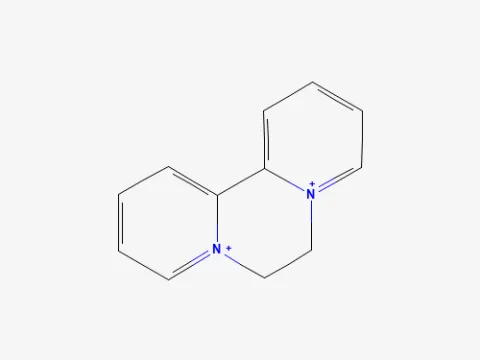
Desiccants
Desiccants are a category of agricultural chemicals specifically designed to induce rapid drying of plant tissues. Their primary role in modern farming is to accelerate the maturation process and ensure a uniform harvest state across the field.
What the section contains
Desiccants
The operational mechanism involves disrupting cellular integrity and biological processes. By breaking down plant membranes, desiccants force a rapid loss of moisture, effectively stopping the plant's metabolic activity and photosynthesis.
These substances act primarily through contact, meaning they affect the parts of the plant they directly touch. This rapid dehydration leads to a visible color change in the plant, signaling the cessation of growth and the beginning of the dry-down phase.
The group comprises various chemical formulations, including bipyridyls and organic phosphonates. Choosing the right substance depends on the crop type, local environmental conditions, and the required speed of dehydration.
Successful desiccation is highly influenced by ambient temperature and sunlight. Higher temperatures during application significantly enhance the effectiveness of the process, allowing for quicker and more reliable moisture reduction in crops.
Desiccants are extensively used on crops like sunflowers, soybeans, canola, pulses, and potatoes. They are especially beneficial in regions with unpredictable weather, where they prevent crop degradation from prolonged exposure to humidity.
By eliminating green plant matter, desiccants clear the way for mechanical harvesting equipment. This prevents machine clogging and reduces the strain on combines, leading to higher operational speeds and improved efficiency.
Beyond crop management, these chemicals effectively control weeds that remain green at the end of the season. Removing this weed biomass ensures that the harvested grain remains free of contaminants and excess moisture.
In potato cultivation, desiccation helps in setting the skin, which is crucial for preventing bruising and mechanical damage during harvest and storage. This significantly improves the marketability and shelf life of the tubers.
Desiccants are also used as a tool to manage pathogen spread. By prematurely killing the host plant tissue, they prevent fungal diseases from migrating from stems to seeds or tubers, ensuring a higher quality of the final harvest.
Timing the application is critical for successful results. Farmers must monitor the crop’s moisture level closely; application typically begins when the seeds reach physiological maturity and moisture levels drop below critical thresholds.
The dosage and water volume per hectare depend on the crop density and the sprayer type. Proper calibration is essential to ensure that the chemical reaches all parts of the canopy, achieving uniform drying across the entire field.
Aerial application is often preferred for tall-growing crops like sunflowers to prevent mechanical damage from ground machinery. This method requires careful monitoring of wind speed and drift control to ensure safe and accurate distribution.
Environmental conditions during the application window should be monitored. Optimal results are achieved during calm, sunny days when the plants are actively transpiring, allowing the chemical to penetrate and act effectively.
The interval between application and harvest must strictly follow the product guidelines. This period ensures that the plant tissue has fully dried down, allowing for efficient threshing and cleaning of the grain during harvest.
Strict adherence to pre-harvest intervals is mandatory for food safety. Using desiccants improperly or harvesting too early can result in unacceptable chemical residues in the harvested produce, exceeding regulatory limits.
Spray drift control is a major safety concern. Since desiccants are lethal to green plant tissue, accidental drift onto adjacent crops or neighboring fields can cause significant economic losses and environmental damage.
Desiccants should not be used on seed-production crops without professional assessment, as premature application can negatively impact seed viability, germination energy, and the overall quality of the next season's planting material.
Operators must prioritize safety by using proper protective gear. Desiccants can be toxic if inhaled or absorbed through the skin, necessitating rigorous safety protocols and environmental protection measures during handling.
Compatibility with other agrochemicals is limited. It is generally recommended to apply desiccants as a standalone operation rather than mixing them with other pesticides or fertilizers to avoid efficacy loss or chemical instability.