
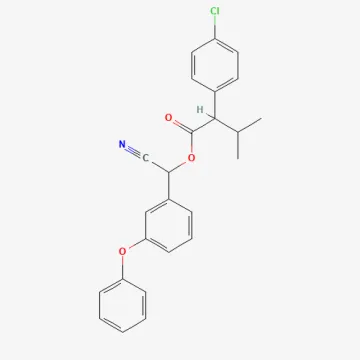
Fenvalerate
Description
Mode of action
Fenvalerate belongs to the chemical class of second-generation synthetic pyrethroids. This substance acts as a contact and stomach insecticide, specifically targeting the nervous system of insects.
The mode of action is based on disrupting cell membrane permeability and blocking sodium channels within the nerve fibers of the pest. This causes rapid membrane depolarization, paralysis, and subsequent death of the insect within a short period.
Products containing fenvalerate exhibit a strong "knockdown effect," which is characterized by the immediate loss of activity in the pest upon contact with the treated surface or ingestion of the substance.
The compound demonstrates high biological activity even at low ambient temperatures, which sets it apart from many organophosphate compounds whose effectiveness often decreases in cooler weather conditions.
The duration of protective action for fenvalerate in field conditions typically lasts from 7 to 14 days, depending on weather conditions, solar radiation levels, and the intensity of the pest population development.
What it targets
Fenvalerate is a broad-spectrum insecticide used to control Lepidoptera, Coleoptera, Homoptera, and Hemiptera orders of pests.
It is effective in managing pests such as cutworms, leafrollers, Colorado potato beetles, cereal beetles, shield bugs, as well as various species of aphids and flea beetles that infest crop fields.
The pesticide is widely used on cereal crops, potatoes, open-field vegetables, sugar beets, and fruit orchards to prevent mass damage to leaf tissue and plant reproductive organs.
- Caterpillars of cutworms and leafrollers
- Larvae and adults of Colorado potato beetles
- Cereal bugs
- Complex of cereal beetles
Due to its versatility, fenvalerate is often included in integrated pest management (IPM) programs as a tool for the rapid reduction of pest populations when economic threshold levels are reached.
Rates and timing
Application rates vary depending on the cultivated crop, the type of pest, and the sprayer equipment used, typically ranging from 0.1 to 0.3 liters (or kilograms) of active ingredient per hectare.
Treatments should be applied during the growing season when the first signs of pest infestation appear or upon reaching the economic injury level (EIL) established for specific regions.
To ensure maximum efficiency, fine-droplet spraying is recommended to provide uniform coverage of the entire leaf surface, as fenvalerate does not possess systemic activity and does not translocate within plant tissues.
The optimal time for protection measures is early morning or evening hours with wind speeds not exceeding 3-5 meters per second to minimize spray drift and increase the concentration of the product on the target.
The interval between treatments should be at least 14–20 days, and it is highly recommended to rotate with insecticides from different chemical groups to prevent the development of resistance in pest populations.
Restrictions
Fenvalerate is toxic to bees and other beneficial entomophagous insects; therefore, application during the flowering period of crops is strictly prohibited to preserve pollinator populations.
When handling the product, strict adherence to safety regulations is mandatory, including the use of personal protective equipment (respirators, gloves, protective clothing) and the prevention of runoff into water bodies due to its high toxicity to fish and aquatic organisms.
There are specific pre-harvest intervals (PHI), usually ranging from 20 to 30 days depending on the crop type, which must be considered during harvest planning to ensure product safety.
Application during hot weather is not recommended, as temperatures above +25°C can decrease the effectiveness of pyrethroids and significantly increase the risk of rapid evaporation of the spray solution.
Storage of the product must take place in specially equipped facilities, away from food and feed, following the temperature guidelines provided by the manufacturer in the product label.
Status in the European Union
Not approved in the EU
- CAS number
- 51630-58-1
- Category (EU)
- IN - Insecticide
- ADI
- 0.0125 mg/kg bw/day
EU status is for reference only and does not replace national registration in your country.