
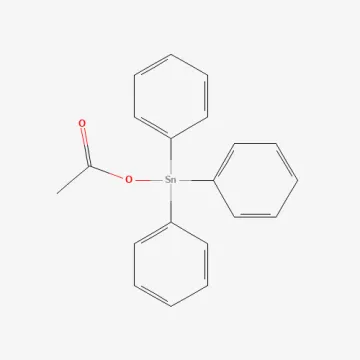
Fentin acetate
Description
Mode of action
Fentin acetate is a well-known organotin compound used primarily as a protective, contact-acting fungicide in agricultural settings.
The mode of action involves the inhibition of oxidative phosphorylation within the mitochondria of fungal cells, effectively disrupting the energy metabolism of the pathogen.
By interfering with essential enzyme activities, the fungicide prevents the growth, germination, and successful infection of fungal spores on plant surfaces.
Since the compound acts primarily by contact, it does not translocate systemically but creates a durable residue on leaves and stems that repels and inhibits incoming pathogens.
Furthermore, the substance exhibits secondary antifeedant properties, providing minor control against certain insects that graze on leaf tissue during the growing season.
What it targets
This active ingredient is widely utilized to control a range of devastating fungal diseases that impact global crop productivity and yield quality.
It is predominantly used on potato crops to manage late blight (Phytophthora infestans), especially during periods of high humidity and rainfall.
Sugar beet cultivation also relies on this substance to control Cercospora leaf spot, a disease capable of significantly reducing sugar content in harvested beets.
Additionally, Fentin acetate is applied to various solanaceous crops to prevent early blight and other foliage-destroying pathogens.
- Late blight in potatoes
- Cercospora leaf spot in sugar beets
- Early blight in solanaceous crops
- Various fungal leaf spots
Rates and timing
Application rates for Fentin acetate must be determined based on the specific crop requirements and the severity of the local disease pressure.
Preventive application is strongly recommended, as the compound acts as a protective shield rather than a curative agent for well-established infections.
Spray intervals generally range from 7 to 14 days, depending on weather conditions and the rate of new vegetative plant growth following the initial application.
Proper calibration of spraying equipment is essential to ensure uniform distribution of the product, as coverage is the key factor for its efficacy.
Farmers should always consult the specific label instructions for tank-mixing protocols to avoid potential chemical incompatibilities with other inputs.
Restrictions
Fentin acetate requires rigorous safety management, as organotin compounds pose significant toxicity risks to both operators and the environment.
Extreme care must be taken to prevent drift into water sources, as the substance is highly toxic to aquatic organisms, including fish and invertebrates.
Personal Protective Equipment (PPE) including respiratory protection and chemical-resistant clothing must be worn during all stages of handling and application.
Strict observance of pre-harvest intervals is mandatory to ensure that chemical residues in the final food product remain within safe legal limits.
Do not apply during high wind or intense solar heat, as these conditions significantly reduce field efficiency and increase the risk of off-target contamination.
Status in the European Union
Not approved in the EU
- CAS number
- 900-95-8
- Category (EU)
- FU - Fungicide
- ADI
- 0.0004 mg/kg bw/day
EU status is for reference only and does not replace national registration in your country.