
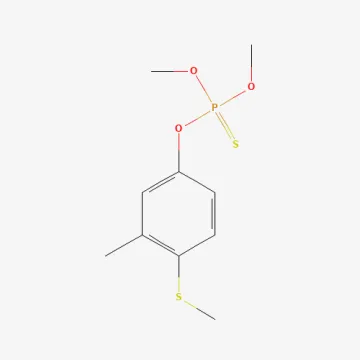
Fenthion
Description
Mode of action
Fenthion belongs to the organophosphate class of chemicals and acts as a potent contact and stomach insecticide and acaricide.
Its primary mechanism of action involves the irreversible inhibition of the enzyme acetylcholinesterase within the insect's nervous system.
By blocking this enzyme, the insecticide causes an accumulation of acetylcholine, leading to a breakdown in nerve impulse transmission.
This results in rapid paralysis, tremors, and eventually the death of the target pest shortly after exposure.
The substance exhibits systemic properties, allowing it to penetrate plant tissues and effectively target pests that are not easily reached by surface contact.
What it targets
Fenthion is widely used to control a broad spectrum of chewing and sucking insects, as well as various mite species.
Common targets include fruit flies, moths, aphids, scale insects, whiteflies, and various bugs damaging crops.
It provides effective management against pests that pose a threat to both fruit yield and the health of ornamental plants.
Its efficacy makes it a valuable tool for professional growers working in diverse agricultural settings.
- Pome fruits (apples, pears)
- Vegetable crops grown in open fields
- Field and industrial crops
- Ornamental trees and shrubbery
Rates and timing
Application rates for Fenthion vary based on the target crop, the specific pest species, and the density of the infestation.
The pesticide should be diluted with the required volume of water to create a uniform spray mixture before application.
It is recommended to apply the product during the early stages of pest development to achieve optimal control and minimize damage.
Depending on the regional requirements, the number of applications per season is limited to prevent the development of pest resistance.
Proper calibration of spraying equipment is essential to ensure that the active ingredient covers the crop surface effectively.
Restrictions
Fenthion is classified as a highly toxic substance, particularly to honeybees, aquatic life, and birds, requiring careful environmental management.
Applications must never occur during the flowering stage of crops to protect pollinators and prevent ecological disruption.
Strict observance of the pre-harvest interval is mandatory to ensure that residues in the final food product are below safety limits.
Operators must wear appropriate personal protective equipment, including respirators and chemical-resistant gloves, at all times.
It is crucial to follow the manufacturer's specific handling instructions to avoid accidental exposure or environmental contamination.
Status in the European Union
Not approved in the EU
- CAS number
- 55-38-9
- Category (EU)
- IN - Insecticide
- ARfD
- 0.01 mg/kg bw/day
EU status is for reference only and does not replace national registration in your country.