
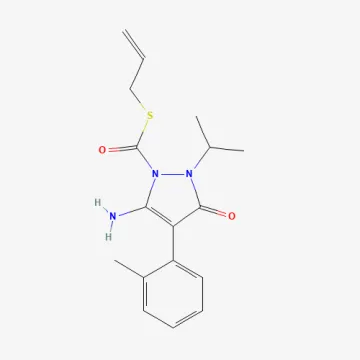
Fenpyrazamine
Description
Mode of action
Fenpyrazamine belongs to the pyrazole-carboxamide chemical class. Its mechanism of action involves inhibiting the growth of pathogen mycelium by interfering with cell wall synthesis processes in fungi.
The substance effectively suppresses ergosterol biosynthesis and disrupts metabolic pathways essential for the development of fungal infections. This leads to the rapid arrest of pathogen growth immediately after contact.
The product demonstrates strong curative and preventive properties. The active ingredient penetrates the surface layers of plant tissues, ensuring protection even when initial symptoms of infection appear.
High lipophilicity allows fenpyrazamine to anchor firmly to the surface of leaves and fruits. This prevents the product from being washed away by rainfall, ensuring a prolonged period of protective activity.
The fungicide exhibits translaminar activity, allowing it to redistribute within leaf tissues. This is crucial for reaching areas that are difficult to access with standard spray coverage.
What it targets
The primary use of fenpyrazamine is the control of fungal diseases caused by the Botrytis genus, most notably gray mold (Botrytis cinerea).
The product is widely used on a variety of fruit and vegetable crops, including vineyards, strawberries, and tomatoes, both in greenhouse and field environments.
Its action is targeted at suppressing spore germination and the development of primary mycelium on fruits during ripening, thereby reducing post-harvest losses.
Fenpyrazamine is also capable of suppressing other fungal pathogens often found in intensive vegetable farming, helping to clean the crop of infectious backgrounds.
It serves as a key tool in anti-resistance management programs. Its integration allows growers to rotate fungicides with different modes of action to prevent resistance.
Rates and timing
Application rates vary depending on the crop being treated, the intensity of the disease pressure, and the specific equipment used for spraying.
Treatment timing must be aligned with the plant's phenological stages. Applications are typically recommended during flowering and throughout the fruit development period.
To prevent the development of resistance in Botrytis populations, it is recommended to limit the number of treatments per season to two or three applications.
Achieving uniform coverage of the entire plant surface, especially on fruits and berries most prone to rotting, is essential for the efficacy of the treatment.
Always consult the specific product label for recommended dosages, as these may vary based on the formulated concentration of the active ingredient.
Restrictions
Strict adherence to pre-harvest intervals (PHI) is mandatory when using fenpyrazamine to ensure that no harmful residues remain in the harvested produce.
Avoid tank-mixing with substances that may cause phytotoxicity or neutralize the efficacy of the fungicide. Always perform a compatibility test before mixing.
Standard personal protective equipment, including gloves, goggles, and protective clothing, must be worn during handling and application to avoid skin and eye contact.
Prevent the runoff of the spray solution into water bodies or sewage systems. Proper disposal of empty containers must follow local environmental regulations.
Store the product in a cool, dry place away from direct sunlight, ensuring it is kept within the temperature range specified by the manufacturer.
Status in the European Union
Not approved in the EU
- CAS number
- 473798-59-3
- Category (EU)
- FU - Fungicide
- Approved from
- 01.01.2013
- Approval until
- 15.01.2025
- ADI
- 0.13 mg/kg bw/day
- ARfD
- 0.3 mg/kg bw
- AOEL
- 0.2 mg/kg bw/day
EU status is for reference only and does not replace national registration in your country.