
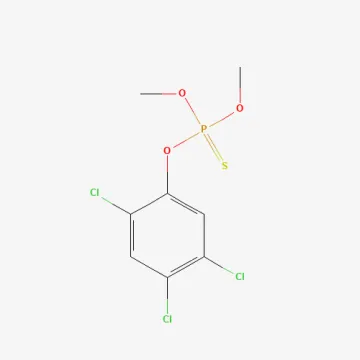
Fenchlorphos
Description
Mode of action
Fenchlorphos belongs to the organophosphate chemical class. Chemically identified as a phosphorothioate, it exerts potent insecticidal and acaricidal effects through both contact and systemic action.
The primary mechanism of action involves the inhibition of the acetylcholinesterase enzyme within the nervous system of pests. This blockage prevents the proper breakdown of neurotransmitters, leading to overstimulation, paralysis, and death.
The substance exhibits moderate persistence in the environment, which allows for extended residual protection of treated surfaces and areas against re-infestation.
Effective application requires thorough coverage of the target site or systemic uptake by the host plant or animal to ensure that the pest is sufficiently exposed to the active ingredient.
Compared to many other organophosphate compounds, fenchlorphos is noted for its relatively lower toxicity to mammals, which has historically facilitated its use in veterinary parasitology.
What it targets
Fenchlorphos is utilized as a broad-spectrum insecticide and acaricide, targeting various ectoparasites and agricultural pests that compromise health and crop yields.
In agricultural settings, it is employed to manage populations of chewing and sucking insects, including aphids, thrips, and certain mite species that damage vegetable and specialty crops.
Its application is most significant in veterinary medicine, where it is used to control flies, lice, ticks, and other parasites that affect livestock and domestic animals.
The compound effectively disrupts the life cycle of pests by targeting both the adult stages and the developing larvae on treated premises or hosts.
- Flies (adults and larvae)
- Ixodid and mange mites
- Lice and biting lice
- Leaf-eating insects
Rates and timing
Application rates for fenchlorphos vary significantly based on the formulation type and the specific target pest. Precise dosage calculations are essential for agricultural efficacy.
When treating stables, pens, or storage areas, the concentration of the active ingredient must be balanced to achieve maximum pest mortality while ensuring safety for humans and animals.
Strict adherence to pre-harvest or pre-slaughter intervals is mandatory to prevent harmful residue levels in food products, as regulated by local agricultural authorities.
In veterinary applications, fenchlorphos is administered via dips, sprays, or systemic treatments under veterinary supervision to ensure proper intervals between sessions.
Successive treatments should be scheduled to coincide with the developmental biology of the target pest, effectively eradicating successive generations.
Restrictions
A primary limitation of fenchlorphos use is its potential for bioaccumulation if dosing instructions are disregarded. Users must follow manufacturer guidelines strictly.
Environmental protection is paramount: avoid application near ponds, streams, or drinking water sources due to high toxicity to aquatic life and fish populations.
Operators must wear appropriate personal protective equipment (PPE), including respirators and chemical-resistant gloves, to prevent dermal contact and inhalation.
Resistance management is a concern with repeated use of organophosphates; rotating fenchlorphos with insecticides of different classes is recommended to prevent control failure.
Storage must be maintained in a cool, dry, and secure location away from the reach of children and livestock, ensuring all containers remain tightly sealed.
Status in the European Union
Not approved in the EU
- CAS number
- 299-84-3
- Category (EU)
- IN - Insecticide
EU status is for reference only and does not replace national registration in your country.