
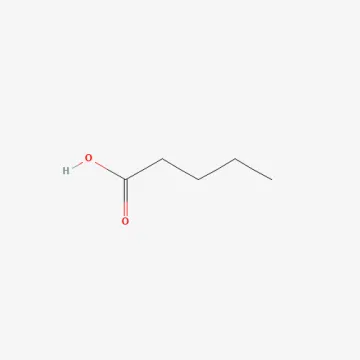
Valeric acid
Description
Mode of action
Valeric acid (pentanoic acid) is a saturated fatty acid that serves as a versatile biochemical agent in modern agricultural practices, primarily functioning as a regulator.
Its mechanism of action involves modifying the permeability of plant cell membranes, which triggers physiological responses to various environmental stresses.
By interacting with internal metabolic pathways, the substance activates the plant's inherent defense mechanisms, enhancing resilience against unfavorable conditions.
In addition to its role in plant physiology, it acts as a behavioral modifier for insects, being utilized in trap designs as an attractant or repellent depending on dosage.
Using this compound promotes an environmentally conscious approach, reducing the total dependency on synthetic pesticides while maintaining crop vigor.
What it targets
The primary agricultural target is the use of valeric acid as a component in semiochemical-based monitoring systems for detecting and managing insect populations.
It is widely applied in vegetable and grain production to increase crop tolerance to abiotic stresses, such as thermal fluctuations and moisture deficits.
The substance functions effectively as an adjuvant, improving the adherence and penetration of other active ingredients into plant tissues during spray applications.
It supports the revitalization of crops that have suffered from environmental setbacks, helping them recover their natural growth rates and productive potential.
The product is suitable for various crops where boosting immune status and managing insect behavior without high toxicity is a priority for the grower.
Rates and timing
Application rates for valeric acid are strictly determined by the manufacturer's guidelines, as precise concentrations are necessary to avoid potential phytotoxicity.
Treatments should ideally be scheduled during the early morning or late evening to minimize the evaporation of the active component under solar radiation.
When preparing tank mixes, the chemical compatibility must be verified to ensure that the acidity of the solution does not degrade other agrochemicals present.
The frequency of application must remain within the recommended limits to prevent the accumulation of metabolites in the final harvestable yield.
Adherence to the prescribed dosage intervals is crucial to maintain optimal biological performance and ensure full compliance with crop safety standards.
Restrictions
A notable limitation of working with valeric acid is its pungent odor, which necessitates the use of appropriate respiratory protection during solution preparation.
Operators must avoid spraying during periods of high pollinator activity to prevent disturbing the natural cycle of beneficial insects in the fields.
The product should be stored in tightly sealed containers within a cool, dry environment, strictly isolated from oxidizers and direct sources of fire.
In case of accidental skin contact or inhalation, thorough rinsing with water is mandatory, and safety protocols must be followed to avoid irritation.
Environmental safety requires careful handling to prevent spills into water bodies, as the substance can alter the chemical balance of aquatic habitats.
Status in the European Union
Not approved in the EU
- CAS number
- 109-52-4
EU status is for reference only and does not replace national registration in your country.