
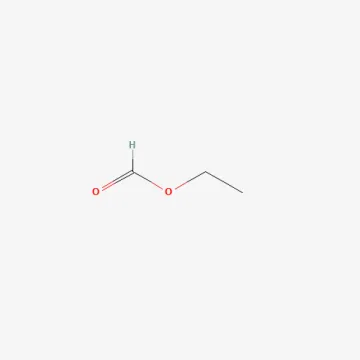
Ethyl formate
Description
Mode of action
Ethyl formate is a highly volatile fumigant and a naturally occurring ester that acts as a potent insecticide, particularly effective for protecting stored agricultural commodities.
The substance functions by inhibiting the respiratory processes of insects, leading to rapid paralysis and death upon exposure to its vapors in an enclosed space.
Unlike many traditional heavy fumigants, ethyl formate features rapid dissipation, which makes it a preferred choice for quick turnover of goods and efficient warehouse management.
Its mode of action is systemic in the gaseous phase, ensuring that vapors penetrate deep into stacks of grain or bulk products to reach hidden insect larvae.
The compound is effective against all life stages of pests, providing a clean solution for post-harvest protection with minimal environmental impact due to its rapid biodegradability.
What it targets
It is widely utilized in the food storage industry to manage and eliminate various stored-product insects that jeopardize the quality and safety of commodities.
- Rice and maize weevils
- Saw-toothed grain beetles
- Indian meal moths
- Grain mites
- Flour beetles
The product is specifically suited for treating cereal grains, dried fruits, nuts, and processed plant-based foods that require rapid disinfestation without chemical residues.
It acts effectively against pests that penetrate the kernels or seeds, protecting the integrity of the product and preventing quantitative and qualitative losses.
Ethyl formate is frequently used for the treatment of shipping containers, silo spaces, and small storage units to maintain strict sanitary standards.
It is also an essential tool for preventing the spread of quarantine pests in international trade by ensuring that exports meet destination bio-security requirements.
Rates and timing
The application rate is strictly calibrated based on the total volume of the storage area and the degree of airtightness maintained during the exposure period.
Temperature is a critical factor, with optimal effectiveness observed within the range of 15°C to 25°C to ensure proper evaporation and gas distribution.
The exposure duration is typically set to allow the gas to permeate the entire commodity mass, usually ranging from 12 to 24 hours depending on the target species.
Post-fumigation, a mandatory aeration period is required to ensure that residual levels fall within acceptable safety margins before the products are handled or consumed.
Precise monitoring during the process is necessary to verify that the concentration remains consistent throughout the facility to prevent sub-lethal exposure.
Restrictions
Safety is paramount as ethyl formate is a flammable liquid and vapor, necessitating the prohibition of all sparks, open flames, or smoking in the vicinity during application.
Effective fumigation is impossible without complete sealing of the storage facility, as gas leakage results in failure to control the infestation and may lead to pest resistance.
Only trained professionals equipped with appropriate personal protective equipment, specifically gas masks and protective suits, should perform these operations.
Entry into treated areas after the exposure period is strictly restricted until atmospheric tests confirm that the environment is safe for human presence.
Care must be taken when applying the substance to highly moisture-sensitive or aromatic products to avoid potential impacts on the product's flavor profile.
Status in the European Union
Not approved in the EU
- CAS number
- 109-94-4
- Category (EU)
- IN - Insecticide
EU status is for reference only and does not replace national registration in your country.