
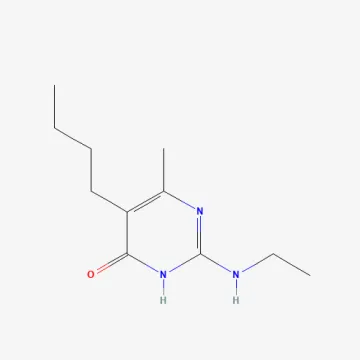
Ethirimol
Description
Mode of action
Ethirimol belongs to the chemical class of pyrimidine fungicides and possesses pronounced systemic action. Its primary task is the prevention and treatment of fungal plant infections by inhibiting the pathogen's metabolism.
The preparation effectively penetrates plant tissues, providing protection to both treated and newly growing parts. It is capable of translocation via the xylem, which allows it to actively influence mycelial development within leaf blades.
The mechanism of action is based on inhibiting nucleic acid synthesis in fungi. This leads to the cessation of hyphal growth and subsequent pathogen death, making it indispensable in integrated pest management systems.
The substance affects key enzymatic processes characteristic of powdery mildew fungi. Due to high selectivity, ethirimol typically shows no phytotoxic effect on crops when used according to regulations.
Systemic activity is maintained over an extended period, which reduces the frequency of spray applications on cereal crops. This property is crucial for maintaining high yields under high infection pressure.
What it targets
The main purpose of ethirimol is the control of powdery mildew caused by specialized pathogens. This substance is particularly effective against species of the genera Erysiphe and Sphaerotheca.
The preparation is widely used on cereal crops, including wheat and barley. It successfully halts disease progression at early growth stages, preventing premature leaf senescence.
Ethirimol also demonstrates high effectiveness in controlling powdery mildew on greenhouse vegetable crops. This allows its inclusion in tank mixtures for comprehensive greenhouse protection.
The active ingredient is capable of suppressing even resistant pathogen populations that have developed tolerance to other fungicide classes, making it a vital tool for anti-resistance strategies.
The spectrum of activity includes suppression of primary infection and prevention of mass fungal sporulation. Thus, the application protects the plant's assimilative surface from aggressive pathogen impact.
Rates and timing
Ethirimol application rates vary depending on the severity of crop infection and the plant's growth stage. It is recommended to strictly follow the regulations provided in the specific product label.
Optimal timing coincides with the appearance of the first visual signs of powdery mildew. Early treatment allows for the suppression of the disease before significant damage occurs to the leaf apparatus.
For field crops, a single application is often practiced during the stem elongation or early heading stages. In cases of severe epiphytotics, a repeated application may be performed observing pre-harvest intervals.
When used in tank mixes, it is important to verify compatibility with other insecticides or growth regulators. Incorrect combinations can reduce the biological efficacy of the entire mixture.
Spray volume should ensure full and uniform coverage of the leaf surface. Using high-quality spraying equipment significantly improves the efficacy of fungicide protection.
Restrictions
When working with ethirimol, individual protective measures must be strictly observed, including the use of respirators, protective suits, and gloves. The preparation is a chemically active substance.
Environmental safety restrictions include preventing the runoff of working solutions into water bodies or sewage. It is important to perform applications in calm weather to avoid drift onto neighboring areas.
Pre-harvest intervals must be strictly followed to ensure the safety of agricultural produce. Ignoring these deadlines can lead to the accumulation of residual amounts of the active ingredient.
Storage of the preparation should be in dry, cool rooms, inaccessible to children and pets. The packaging must be kept tightly closed to prevent degradation of the active component.
It is not recommended to apply during flowering to minimize the risk to pollinating insects. Accounting for biological features of entomofauna is an essential part of responsible pesticide usage.
Status in the European Union
Not approved in the EU
- CAS number
- 23947-60-6
- Category (EU)
- FU - Fungicide
EU status is for reference only and does not replace national registration in your country.