
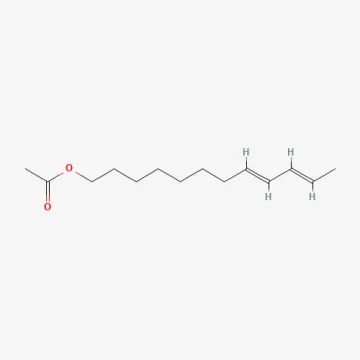
(E,E)-8,10-Dodecadien-1-yl acetate
Description
Mode of action
(E,E)-8,10-dodecadien-1-yl acetate belongs to the chemical class of synthetic insect pheromones, specifically acting as a sex attractant for specific Lepidoptera species.
The primary mechanism of action is mating disruption, achieved by creating a high concentration of the pheromone within the orchard canopy.
By saturating the air with this compound, the communication between males and females is masked, preventing males from locating mating partners.
This approach effectively reduces the population density of the next generation, as unfertilized eggs are laid or mating is significantly delayed.
Unlike traditional broad-spectrum insecticides, this substance specifically targets the reproductive behavior of the pest without impacting beneficial species.
What it targets
The substance is primarily used to control the codling moth (Cydia pomonella), one of the most destructive pests in pome fruit production worldwide.
It is also applied to mitigate the impact of other related tortricid moths that cause economic damage to apple and pear harvests.
The target stage for this intervention is the adult moth, interrupting the life cycle before egg deposition on developing fruits occurs.
Rates and timing
Application involves the strategic placement of pheromone dispensers throughout the orchard before the first flight of the moths in spring.
The required quantity varies by formulation but typically ranges from 300 to 500 dispensers per hectare to ensure adequate atmospheric coverage.
Timing is critical and should be synchronized with the biofix date determined by local pest monitoring programs using separate traps.
Restrictions
Mating disruption is highly effective in large, uniform orchard blocks; smaller or isolated plots may suffer from immigration of mated females.
Maintaining proper dispenser density is essential, as gaps in the coverage area significantly decrease the success rate of the disruption program.
The longevity of the dispensers is limited by environmental factors, including temperature and UV radiation, which affect the release rate of the chemical.
This technology is best utilized as part of an Integrated Pest Management (IPM) system, which may still require supplementary treatments during peak population outbreaks.
Status in the European Union
Approved in the EU
- Approved from
- 01.09.2022
- Approval until
- 30.08.2037
EU status is for reference only and does not replace national registration in your country.