
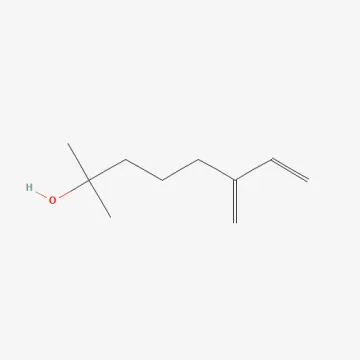
Myrcenol
Description
Mode of action
Myrcenol belongs to the class of terpene alcohols and is used in agronomy not as a classic pesticide, but as a highly effective pheromone attractant.
Its mechanism of action is based on mimicking natural chemical signals that insects use for communication within a population.
The product affects the receptors of pests, triggering a specific behavioral response, most often aimed at finding a mate or a site for colonization.
Unlike insecticides, myrcenol does not have a toxic effect and does not kill insects directly, making it an environmentally friendly tool.
Using this substance allows for effective population management of pests without disrupting the biological balance in the field.
What it targets
The main area of myrcenol application is the control of pests from the order Coleoptera, in particular, bark beetles and weevils.
The substance is extremely effective against various species of bark beetles and wood borers that affect coniferous and deciduous trees in forest areas.
It is used to attract insects into traps, which allows monitoring the population dynamics of pests in a specific area.
Due to its high selectivity, myrcenol practically does not affect beneficial entomofauna, ensuring precision control in shelterbelts.
The use of the substance is a key component of Integrated Pest Management (IPM) strategies, where minimizing chemical load is important.
Rates and timing
The application rates of myrcenol depend directly on the type of dispenser used and the climatic conditions of the region where treatments are carried out.
Usually, the substance is placed inside special pheromone traps, which are installed based on the count per hectare or individual tree.
Application timing is strictly tied to the pest's phenology: the installation of attractants is carried out immediately before the start of the massive insect flight.
The effectiveness of the product is maintained for several weeks, after which the dispenser must be replaced to maintain the required concentration of volatile substances.
It is recommended to monitor the condition of the traps every 7-10 days to control occupancy and adjust the protection strategy if necessary.
Restrictions
The main limitation when working with myrcenol is the need to protect the substance itself from direct sunlight, which causes its rapid degradation.
Weather conditions, such as strong winds or heavy rain, can reduce the effectiveness of attraction by washing away or quickly dispersing the active ingredient.
Strict storage conditions should be followed: in a cool, dry place in a tightly closed container to prevent the evaporation of terpene compounds.
The use of the product near residential areas without proper labeling of the traps is prohibited to avoid accidental human contact with the substance.
When working, it is necessary to avoid contact of the concentrate with skin and mucous membranes, while using standard personal protective equipment.
Status in the European Union
Not approved in the EU
- CAS number
- 543-39-5
EU status is for reference only and does not replace national registration in your country.