
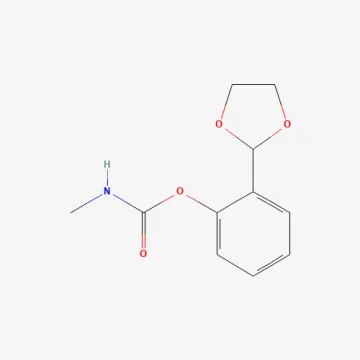
Dioxacarb
Description
Mode of action
Dioxacarb belongs to the carbamate chemical class and acts as a potent contact and systemic insecticide. Its primary mode of action is the inhibition of the enzyme acetylcholinesterase within the insect's nervous system.
By blocking this enzyme, the chemical causes an accumulation of acetylcholine at the nerve synapses, which leads to continuous nervous impulses. This hyper-stimulation results in paralysis and subsequent death of the pest.
The substance is characterized by its high speed of penetration through the insect's cuticle or via ingestion. This allows it to effectively control both surface-feeding pests and those that hide within plant tissues.
The efficacy of Dioxacarb is strongly correlated with ambient temperature. It demonstrates peak biological performance during warm weather, making it an excellent choice for rapid intervention during pest outbreaks.
Due to its specific mechanism, this active ingredient remains an effective tool for managing populations that have developed resistance to organophosphate pesticides, helping to break the cycle of chemical immunity.
What it targets
Dioxacarb has a broad spectrum of activity against various chewing and sucking pests. It is effective across different life stages, including larvae and adult insects, making it versatile for field and vegetable crop protection.
- Aphids and leafhoppers on fruit and vegetable crops.
- Soil-dwelling pests such as wireworms and soil-borne larvae that damage root systems.
- Lepidopteran larvae, including various species of cutworms and leaf rollers.
- Beetles and weevils that feed on the vegetative parts of sugar beets and potatoes.
- Hemipteran pests that cause damage to cereal crops during the grain-filling period.
Rates and timing
Application of Dioxacarb must strictly follow the labeling instructions for the specific product and crop. Dosage rates are determined based on the level of pest infestation and the growth stage of the plants.
Applications should be timed to coincide with the most vulnerable life stages of the pests. Ensuring thorough coverage of the plant canopy or soil zone is essential for maximizing the product's performance.
When used in soil treatments, proper calibration of equipment is necessary to ensure uniform distribution in the root zone. This provides effective protection against root-feeding pests during the early development of the crop.
Strict observance of pre-harvest intervals (PHI) is mandatory to ensure that the final harvested produce meets safety and regulatory standards for pesticide residues.
Integrating Dioxacarb into a diversified pest management program is recommended. Rotating it with different classes of insecticides helps delay the development of resistance in target pest populations.
Restrictions
Dioxacarb is considered moderately toxic to mammals; therefore, users must wear appropriate personal protective equipment (PPE), including gloves, respiratory protection, and eye goggles during application.
The compound is highly hazardous to honeybees and other beneficial pollinators. Spraying must not be performed during bloom or when bees are actively foraging in the field.
Environmental precautions include preventing spray drift into water bodies, drainage systems, or non-target vegetation. Buffer zones should be maintained as specified by local regulations.
Storage of the chemical must be in original, tightly sealed containers within a cool, dry, and well-ventilated storage facility. Access must be restricted to qualified and authorized personnel only.
Due to its ecotoxicological profile, special care must be taken to prevent contamination of surface water, as Dioxacarb can be harmful to aquatic organisms and sensitive ecosystems.
Status in the European Union
Not approved in the EU
- CAS number
- 6988-21-2
- Category (EU)
- IN - Insecticide
EU status is for reference only and does not replace national registration in your country.