
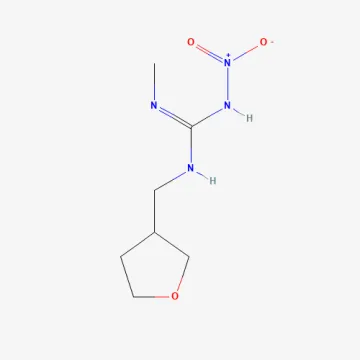
Dinotefuran
Description
Mode of action
Dinotefuran belongs to the third-generation neonicotinoid chemical class. It is a highly effective insecticide characterized by its pronounced systemic action and rapid penetration into plant tissues.
The mechanism of action involves blocking nicotinic acetylcholine receptors in the insect's nervous system. This causes continuous excitation of nerve impulses, leading to paralysis and the rapid death of the pest.
Due to its high water solubility, dinotefuran has the ability to move rapidly through the plant's xylem. This ensures the protection of young shoots and leaves that grow after the treatment has been applied.
The substance is active not only upon direct contact with the pest but also when the insect consumes treated parts of the plant. The insecticide demonstrates excellent performance even in high-temperature conditions, where other agents often lose their efficacy.
An important feature of this active ingredient is its resistance to being washed off by rain. This makes it suitable for use in regions with high humidity without losing its protective effect.
What it targets
Dinotefuran effectively controls a wide range of sucking and leaf-eating pests. It is particularly successful in combating representatives of the Hemiptera, Lepidoptera, and Coleoptera orders.
Primary targets for application include various species of aphids, whiteflies, thrips, and leafhoppers. The preparation shows high effectiveness in suppressing populations of scale insects.
It is successfully used against bugs, including stink bugs, as well as against certain types of leaf miners. The insecticide can be utilized to manage coleopteran pests such as weevils.
The substance works efficiently against both adults and larvae of pests at various stages of their development. Due to its systemic effect, it can affect pests that are hidden inside the leaf blade.
The use of this agent allows for a significant reduction in crop damage, which prevents the development of secondary infections carried by sucking insects.
Rates and timing
Application rates for dinotefuran depend on the specific crop and the level of pest infestation. Usually, the preparation is applied in low concentrations, making it cost-effective for integrated pest management systems.
For field crops, spraying is performed during the period of mass pest emergence, based on phytosanitary monitoring data. Pre-harvest intervals typically range from 7 to 30 days, depending on local regulations.
The working solution must be prepared immediately before use. It is crucial to ensure even coverage of the entire leaf surface so the systemic insecticide can effectively distribute throughout the plant tissues.
The number of applications per season is usually restricted to prevent the development of pest resistance. Rotating with insecticides from other chemical classes is highly recommended.
To increase efficiency, the use of adjuvants is permitted, although compatibility testing with other pesticides must be performed before tank mixing.
Restrictions
Dinotefuran is moderately toxic to warm-blooded animals, requiring standard personal protective measures. Operators must wear protective clothing, gloves, and safety goggles during handling.
The substance is extremely hazardous to bees and other pollinators. Spraying must not be conducted during active crop flowering or during hours when beneficial insects are actively flying.
Strict adherence to buffer zones around apiaries, water bodies, and residential areas is required. It is prohibited to dispose of residual working solution into water sources or sewage systems.
Storage must be in dry, cool areas inaccessible to children and pets. Packaging must be airtight and properly labeled.
Application is not recommended at wind speeds exceeding 5 m/s to prevent drift onto adjacent areas, especially if flowering honey plants are present nearby.
Status in the European Union
Not approved in the EU
- CAS number
- 165252-70-0
- Category (EU)
- IN - Insecticide
EU status is for reference only and does not replace national registration in your country.