
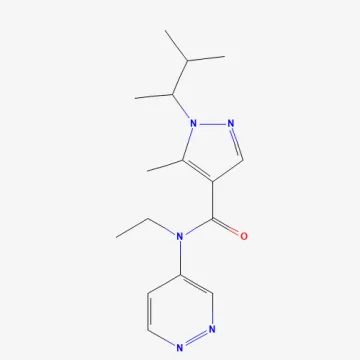
Dimpropyridaz
Description
Mode of action
Dimpyridaz is classified as a modern fungicide acting as a potent succinate dehydrogenase inhibitor (SDHI) within the mitochondrial electron transport chain of fungal pathogens.
The mechanism of action involves the targeted blockade of enzyme complex II in the respiration chain of fungi, which causes immediate disruption of cellular energy production.
Due to its high specificity, the active ingredient effectively inhibits spore germination, mycelial growth, and sporulation, providing both preventive and curative protection.
The substance is known for excellent lipophilicity, which allows it to rapidly penetrate the leaf cuticle and integrate into plant tissues for long-lasting efficacy.
Dimpyridaz is often incorporated into anti-resistance strategies, offering a unique binding profile that contributes to effective pathogen management in modern agriculture.
What it targets
The active ingredient is designed to control a diverse range of pathogens responsible for blights, powdery mildew, and various other destructive fungal diseases.
This group demonstrates high effectiveness against Ascomycetes and Deuteromycetes, which cause significant yield losses in cereal, horticultural, and vegetable crops.
Formulations based on this compound provide robust control of infections even under high-humidity conditions, when the risk of epidemic spread is at its peak.
Systemic properties ensure that the compound protects parts of the plant not directly covered during spraying by translocating within the plant tissues.
Application is highly effective both during the early stages of crop development for prophylactic purposes and upon the onset of initial disease symptoms in the field.
Rates and timing
Application rates are determined by the specific product formulation and the current agricultural and environmental conditions present in the field.
The optimal timing for treatment corresponds with the stages of rapid crop growth, when fungal pressure approaches the economic threshold of damage.
When preparing tank mixtures, it is crucial to verify compatibility with other pesticides to ensure no phytotoxicity occurs and efficiency is maintained.
The number of treatments per season is strictly regulated to prevent the accumulation of residues in the final agricultural produce.
Maintaining proper intervals between applications is essential to ensure consistent protection throughout the entire critical period of crop development.
Restrictions
When handling Dimpyridaz, the use of personal protective equipment (PPE) is mandatory to protect the skin, eyes, and respiratory system from exposure.
Disposal of leftover spray solution into waterways or sewage systems is strictly prohibited, as the substance may pose risks to aquatic organisms.
The pre-harvest interval (PHI) specified in the product label must be strictly observed to ensure the safety and quality of the harvested produce.
Given the risk of pathogen resistance, it is recommended to rotate the use of Dimpyridaz with fungicides representing different chemical classes and modes of action.
Storage should be confined to specialized warehouse facilities under controlled temperature conditions to preserve the stability and effectiveness of the active ingredient.
Status in the European Union
Pending
- CAS number
- 1403615-77-9
- Category (EU)
- IN - Insecticide
EU status is for reference only and does not replace national registration in your country.