
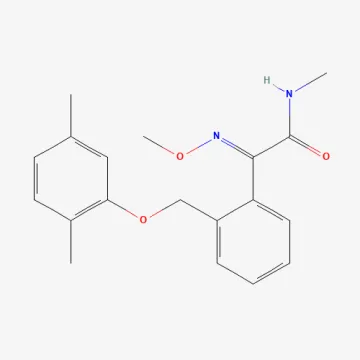
Dimoxystrobin
Description
Mode of action
Dimoxystrobin is a systemic fungicide belonging to the strobilurin chemical class, widely used in modern agriculture to manage fungal pathogens.
The mode of action involves the inhibition of mitochondrial respiration in fungi by blocking the electron transport chain at the cytochrome bc1 complex.
This action effectively prevents the production of ATP, starving the fungal cells of energy and leading to the inhibition of spore germination and mycelium growth.
Dimoxystrobin is noted for its high lipophilicity, which ensures rapid uptake by the plant and excellent translocation within the leaf tissues for long-lasting protection.
Furthermore, it provides physiological benefits to plants by improving nitrogen utilization efficiency and helping crops withstand environmental stress.
What it targets
This active ingredient is effective against a broad spectrum of fungal diseases affecting various economically important crops globally.
It is specifically recommended for the control of diseases such as:
- Septoria leaf blotch and glume blotch;
- Various types of rust;
- Tan spot (Pyrenophora tritici-repentis);
- Powdery mildew;
- Cercospora leaf spot in sugar beets.
Dimoxystrobin demonstrates high efficacy when used as a preventive measure or at the early stages of disease development in cereal crops.
It is also employed for protecting soybeans and corn from complexes of leaf-spotting diseases that significantly impact yield potential.
Due to its systemic properties, it provides an robust shield against infections that occur in the middle and upper tiers of the plant canopy.
Rates and timing
The recommended dosage typically ranges from 125 to 250 grams of active ingredient per hectare, depending on the disease pressure and crop stage.
Application is most effective when conducted during active vegetative growth or at the first signs of disease incidence in the field.
To maximize efficacy, uniform spray coverage is crucial, and it is often recommended to use surfactants to improve the retention of the fungicide on leaves.
Dimoxystrobin is often formulated in combination with other classes of fungicides to manage resistance and broaden the spectrum of controlled pathogens.
Farmers should monitor local weather conditions and disease scouting reports to determine the precise timing for the most effective field application.
Restrictions
Users must follow strict safety protocols, including the use of appropriate personal protective equipment (PPE) during handling and application.
Environmental precautions must be taken to prevent runoff into water bodies, as the substance can be toxic to aquatic life if introduced in significant quantities.
Resistance management is a critical concern, and growers are advised not to exceed recommended application limits or frequency to maintain long-term product efficacy.
Store the product in its original, sealed containers in a cool, well-ventilated location, ensuring it is kept out of reach of unauthorized persons.
Always dispose of empty containers and wash water according to local environmental regulations to minimize the ecological footprint of the pesticide use.
Status in the European Union
Not approved in the EU
- CAS number
- 149961-52-4
- Category (EU)
- FU - Fungicide
- Approved from
- 01.10.2006
- Approval until
- 31.07.2023
- ADI
- 0.015 mg/kg bw/day
- ARfD
- 0.04 mg/kg bw
- AOEL
- 0.007 mg/kg bw/day
EU status is for reference only and does not replace national registration in your country.