
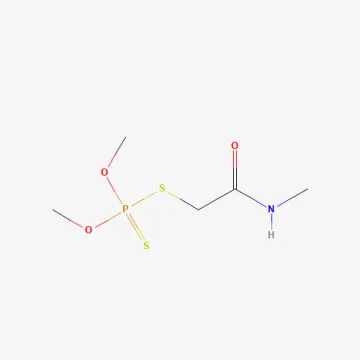
Dimethoate
Description
Mode of action
Dimethoate is a systemic organophosphate insecticide used extensively to control a wide range of agricultural pests. Its primary characteristic is the ability to be absorbed by the plant's vascular system, ensuring protection for both the treated parts and new growth.
The mechanism of action involves the inhibition of the enzyme acetylcholinesterase. By blocking this enzyme, the insecticide prevents the breakdown of the neurotransmitter acetylcholine, leading to continuous nerve excitation, paralysis, and the ultimate death of the target insect.
Beyond its systemic properties, dimethoate possesses strong contact activity. This dual-action approach ensures that insects feeding on the plant, as well as those coming into direct contact with the solution, are effectively controlled.
The residual activity of the substance typically lasts for 10–20 days, which is beneficial for keeping pest populations suppressed under varied environmental conditions. Its efficacy is well-documented in many cropping systems worldwide.
Dimethoate's translaminar properties allow it to move across the leaf surface and penetrate to the underside, which is critical for targeting hidden insects like aphids or mites that congregate in difficult-to-reach areas.
What it targets
Dimethoate is primarily effective against sucking and mining insects. Key targets include aphids, thrips, leafhoppers, and various species of plant bugs that cause significant damage to crops.
It is specifically highly regarded for controlling leafminers, which are notoriously difficult to treat with non-systemic products because they feed inside the leaf tissue, protected from surface-acting sprays.
The insecticide also shows efficacy against spider mites, helping farmers manage infestations that could otherwise lead to rapid defoliation and yield losses in orchards and vineyards.
Furthermore, it is used to manage certain coleopteran pests, including beetles that attack the stems, leaves, or reproductive parts of field crops like wheat and cotton.
- Aphids and psyllids
- Thrips and leafhoppers
- Leaf-mining insects
- Spider mites
- Beetles and weevils
Rates and timing
Application rates for dimethoate generally range from 0.5 to 1.5 liters per hectare. The exact dose depends on the crop type, the specific pest being targeted, and the intensity of the infestation.
Timing is crucial; applications should occur at the earliest sign of pest outbreaks to ensure that populations are suppressed before significant economic damage occurs to the crop yield.
Farmers must strictly adhere to the maximum number of applications permitted per season to prevent chemical residues from exceeding legal limits for food safety and environmental protection.
Preparation of the spray mixture requires clean, neutral water. Operators should ensure that the sprayer is properly calibrated to achieve thorough coverage of the foliage for optimal systemic uptake.
Pre-harvest intervals (PHI) are mandatory and vary by crop. Always consult the product label to ensure the safety of the harvested product and compliance with agricultural regulations.
Restrictions
Dimethoate is classified as moderately toxic to humans and mammals. Proper personal protective equipment (PPE), including chemical-resistant suits, gloves, and respirators, is required during mixing and application.
The compound is highly toxic to bees and beneficial insects. It must never be applied while crops are in bloom or when bees are actively foraging in the field to prevent significant ecological harm.
Compatibility issues exist with highly alkaline substances. Mixing dimethoate with lime-sulfur or other alkaline materials will lead to chemical degradation and a loss of effectiveness.
Environmental care is paramount; avoid spraying during windy conditions to prevent drift toward water bodies or sensitive non-target habitats where the substance could pose risks to aquatic life.
Storage must be maintained in a cool, dry, and secure location according to label instructions to ensure the chemical stability and safety of the pesticide throughout its shelf life.
Status in the European Union
Not approved in the EU
- CAS number
- 60-51-5
- Category (EU)
- IN - Insecticide
- Approved from
- 01.10.2007
- Approval until
- 30.06.2019
EU status is for reference only and does not replace national registration in your country.