
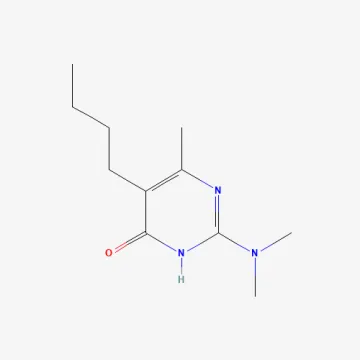
Dimethirimol
Description
Mode of action
Dimethirimol belongs to the pyrimidine chemical class. It is a systemic fungicide that demonstrates significant curative and preventive activity against fungal pathogens.
The active ingredient is rapidly absorbed by the root system or leaves and translocated acropetally (upward) through the xylem, protecting new plant growth.
The mode of action involves disrupting the biosynthesis of nucleic acids within fungal cells, effectively halting mycelial growth and inhibiting spore formation.
The compound is capable of inhibiting fungal metabolism at various developmental stages, making it a valuable tool in integrated pest management programs.
Due to its high systemic properties, dimethirimol provides long-lasting protection by maintaining activity within plant tissues even under challenging environmental conditions.
What it targets
The primary use of dimethirimol is to control powdery mildew fungi that affect a wide range of vegetable and ornamental crops.
The substance is effective against pathogens of the Sphaerotheca, Erysiphe, and Podosphaera genera, which cause white powdery spots on foliage, stems, and fruits.
Commonly treated crops include cucumbers, squash, melons, and various greenhouse-grown vegetables that are highly susceptible to infection.
Using this fungicide allows for effective management of disease outbreaks in greenhouses, where powdery mildew poses a substantial threat to yield quality.
- Suppression of primary fungal infection.
- Reduction of spore production on infested areas.
- Protection of the aesthetic and market value of produce.
Rates and timing
Timing of dimethirimol application is usually based on the appearance of the first symptoms or during conditions highly favorable for disease progression (high humidity, mild temperatures).
Application rates depend on the method; for soil drenching, the concentration of the working solution must be precise to ensure sufficient systemic uptake.
When spraying, it is crucial to achieve uniform coverage of the leaf surface, as surface contact is the precursor to systemic penetration into plant tissues.
The frequency of application is dictated by the pathogen biology and disease severity, with a recommendation to rotate with fungicides from different chemical groups.
Adherence to application guidelines ensures that residue levels in the final produce remain within safety limits after the pre-harvest interval.
Restrictions
Dimethirimol requires strict compliance with safety regulations, as it is a pesticide that necessitates the use of personal protective equipment during handling.
Exceeding recommended dosages is discouraged to prevent potential phytotoxicity and adverse effects on the growth rates of treated crops.
The product must be stored in its original packaging in a cool, dry place, keeping it away from unauthorized individuals and pets.
When working in greenhouses, adequate ventilation is essential, and workers must adhere to the required re-entry intervals after treatment.
Avoid using the product in water protection zones or near open bodies of water to prevent environmental contamination and ecological damage.
Status in the European Union
Not approved in the EU
- CAS number
- 5221-53-4
- Category (EU)
- FU - Fungicide
EU status is for reference only and does not replace national registration in your country.