
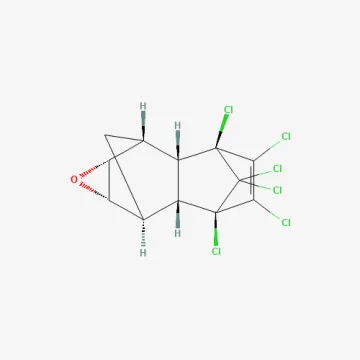
Dieldrin
Description
Mode of action
Dieldrin belongs to the organochlorine class of chemicals, specifically the cyclodiene group. It is known as a persistent organic pollutant that remains stable in the environment for decades.
The mechanism of action involves the disruption of the central nervous system in insects. It prevents the normal transmission of nerve impulses, leading to hyperexcitability, paralysis, and eventual death.
The substance possesses high lipophilicity, allowing it to easily penetrate the chitinous exoskeletons of pests. This feature contributed to its high efficacy at very low application rates.
Unlike modern biodegradable insecticides, Dieldrin shows extreme resistance to chemical, biological, and photochemical degradation. This provided long-term residual control of insect populations.
Due to its high toxicity to non-target organisms and its tendency to bioaccumulate in food chains, Dieldrin is strictly prohibited globally under the Stockholm Convention.
What it targets
Historically, Dieldrin was utilized as a versatile soil insecticide to control a wide range of subterranean agricultural pests that damage root systems.
Target organisms included wireworms, white grubs, mole crickets, and other soil-dwelling larvae that caused significant economic damage to cereal, vegetable, and fiber crops.
The insecticide was also effective against various foliage-feeding insects, including grasshoppers, beetles, and weevils, which posed a threat to crop yields.
It was frequently used as a seed treatment to protect seedlings from soil-borne pests during the critical early stages of germination and establishment.
Beyond agricultural use, Dieldrin played a significant role in public health programs, targeting vectors of diseases such as mosquitoes and tsetse flies.
Restrictions
Dieldrin is currently banned globally for use in agriculture. Its manufacture, trade, and application are strictly prohibited under international environmental agreements.
The primary concern is its long-term persistence in the soil and water, which leads to chronic environmental contamination and damage to local ecosystems.
Dieldrin poses severe risks due to its bioaccumulative nature, meaning it increases in concentration as it moves up the food chain, affecting birds, fish, and mammals.
Residual levels in the soil can contaminate agricultural produce, leading to food safety issues and non-compliance with modern quality and safety standards.
Agricultural sites previously treated with Dieldrin often require extensive environmental remediation to address soil contamination and prevent the leaching of the pesticide into groundwater.
Status in the European Union
Not approved in the EU
- CAS number
- 60-57-1
- ARfD
- 0.003 mg/kg bw
EU status is for reference only and does not replace national registration in your country.