
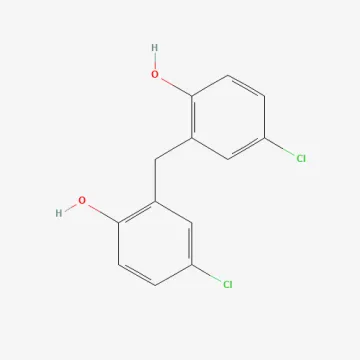
Dichlorophen
Description
Mode of action
Dichlorophen is a chlorinated phenolic compound that acts as a potent contact antiseptic and fungicide with a broad spectrum of activity.
Its mechanism of action involves disrupting the integrity of microbial cell membranes, leading to protein denaturation and cell death.
The substance effectively suppresses the enzymatic systems of fungi, inhibiting respiration and preventing the spread of fungal pathogens.
In addition to its fungicidal properties, the compound exhibits significant anthelmintic and antibacterial activity, making it versatile for disinfection.
The compound is characterized by its stability in the environment, which provides a long-lasting protective barrier on treated surfaces.
What it targets
This agent is highly effective against a wide range of pathogenic fungi responsible for rot and mold on agricultural products.
It is widely used to inhibit the growth of algae and mosses on greenhouse structures, storage facilities, and agricultural equipment.
Dichlorophen is also utilized in sanitary practices to combat parasitic worms, ensuring better hygiene standards in agricultural settings.
The treatment helps maintain the quality of stored harvests by preventing fungal colonization and reducing the rate of biological spoilage.
It is specifically useful for the decontamination of crates and containers used during the transport and long-term storage of crops.
Restrictions
Handling Dichlorophen requires strict adherence to personal protective measures as it is known to cause irritation to skin and mucous membranes.
It is crucial to prevent the chemical from entering water bodies, as it exhibits high toxicity to aquatic life and can disrupt ecosystems.
Application during the active growing season is limited due to potential phytotoxicity, emphasizing its role primarily in surface disinfection.
Proper ventilation of treated storage areas is necessary before re-entry or before storing sensitive goods to avoid chemical residue issues.
Storage must be maintained in dedicated, secure facilities, keeping the chemical well away from food, feed, and areas accessible to unauthorized personnel.
Status in the European Union
Not approved in the EU
- CAS number
- 97-23-4
- Category (EU)
- FU - Fungicide
EU status is for reference only and does not replace national registration in your country.