
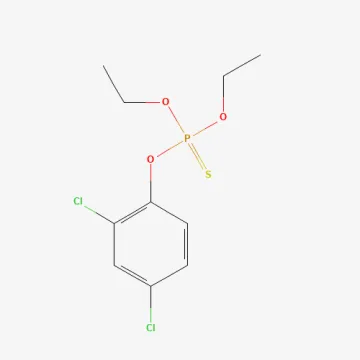
Dichlofenthion
Description
Mode of action
Dichlofenthion is a potent organophosphorus active substance primarily used in agriculture as an insecticide and nematicide for soil treatment.
The mechanism of action involves the inhibition of the enzyme acetylcholinesterase, which is crucial for the proper transmission of nerve impulses in insects and nematodes.
By inactivating this enzyme, the compound causes an accumulation of acetylcholine, leading to continuous nerve excitation followed by paralysis and eventual death of the pest.
The substance typically acts via contact and ingestion, making it highly effective against pests that live within the soil matrix and feed on plant roots.
Due to its chemical stability in soil, it provides a residual protective barrier, preventing re-infestation of young seedlings by soil-borne organisms.
What it targets
Dichlofenthion is specifically designed to control various soil-dwelling insects, such as larvae of dipterous flies and certain species of wireworms.
It is extensively used as a soil treatment agent to suppress harmful plant-parasitic nematode populations that damage crop roots and impair plant health.
Common application areas include vegetable crops, berry bushes, and various horticultural plants that are highly susceptible to subterranean pests.
It is particularly valued for its efficacy in protecting root systems of crops that are sensitive to the damage caused by larvae of root-feeding flies.
Effective management of these pests through dichlofenthion helps in maintaining crop vigor and preventing yield losses in highly infested fields.
Rates and timing
Application rates for dichlofenthion are carefully determined based on the target crop, soil type, and the degree of pest infestation present in the field.
The product is typically applied as a granular formulation, mixed directly into the soil or placed in planting rows to ensure proximity to the developing roots.
Correct timing of the application is essential, usually coinciding with pre-sowing or pre-planting activities to establish a protective zone for the crop.
Over-application must be strictly avoided to prevent phytotoxic effects on sensitive plants and to minimize environmental impact.
Adherence to pre-harvest intervals is mandatory to ensure that the final harvested produce meets all safety and regulatory standards for residues.
Restrictions
Dichlofenthion poses significant toxicity risks to humans and animals; therefore, strict safety protocols must be followed during handling and application.
Personal Protective Equipment (PPE), including gloves, respiratory protection, and protective clothing, is mandatory for all personnel working with the chemical.
The substance is highly toxic to aquatic life, requiring stringent precautions to prevent any runoff into streams, ponds, or groundwater sources.
Storage of the chemical must occur in secure, well-ventilated facilities to prevent unauthorized access and potential environmental contamination.
Disposal of empty containers and unused chemical residues must be conducted according to local environmental regulations for hazardous waste management.
Status in the European Union
Not approved in the EU
- CAS number
- 97-17-6
- Category (EU)
- IN - Insecticide
EU status is for reference only and does not replace national registration in your country.