
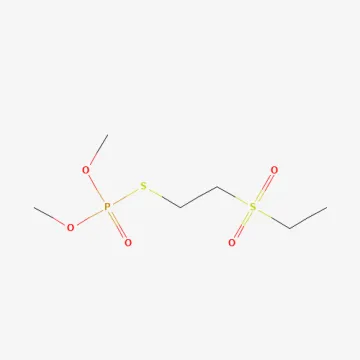
Demeton-S-methyl sulphone
Description
Mode of action
Demeton-S-methylsulphon is a systemic organophosphate insecticide and acaricide. It acts as a metabolite of the parent compound, possessing high biological activity against diverse pest species.
The primary mode of action is the inhibition of acetylcholinesterase, a critical enzyme for nervous system function. This leads to the accumulation of acetylcholine, causing tremors, paralysis, and death in pests.
Upon application, the substance is rapidly absorbed by the plant foliage and translocated through the vascular system in an acropetal direction. This allows the chemical to reach new, untreated plant tissues.
The compound provides both contact and stomach poison effects. Pests are exposed to the active ingredient either by direct spraying or by ingesting the sap from treated plant tissues.
The systemic nature of the substance is particularly effective against concealed pests, such as aphids inhabiting the underside of leaves or within curled leaf margins, where spray coverage is difficult.
What it targets
This group of substances is primarily used to control sap-sucking insects that cause direct damage to crops and transmit viral plant pathogens. Aphids represent the main target group.
It is also employed for the suppression of spider mite populations on various horticultural crops, effectively targeting both mobile larvae and adult stages of these arachnids.
The application is relevant for managing thrips and psyllids in grain, vegetable, and specialty crops. The systemic action helps keep pest populations below economic injury levels.
Whiteflies in greenhouse environments can also be managed with this active ingredient, provided that resistance management strategies are implemented to ensure long-term efficacy.
- Various species of aphids.
- Spider mites and gall mites.
- Thrips and psyllids.
- Whiteflies.
Rates and timing
Application rates are determined by the crop type, pest infestation level, and local regulatory guidelines. The goal is to achieve uniform coverage to facilitate efficient systemic uptake.
Optimal timing is crucial and should coincide with the early stages of pest development. Applications are best conducted during early morning or late evening to maximize stability.
A minimum interval of 10–14 days is recommended between consecutive applications to reduce selection pressure for pesticide resistance and protect natural predators.
The maximum frequency of use per growing season is strictly limited by agricultural regulations to prevent excessive chemical residues in the harvested produce.
Sprayer equipment should be carefully calibrated to ensure the correct droplet spectrum, which facilitates leaf penetration and systemic absorption by the plant.
Restrictions
The active substance is highly toxic to mammals, beneficial insects, and pollinators. Strict adherence to personal protective equipment requirements is mandatory during handling and application.
Usage is prohibited during the flowering stage of crops to prevent mortality in bee populations. Local regulations regarding bee protection must be strictly followed.
Pre-harvest intervals (PHI) must be meticulously observed to ensure that chemical residue levels in food comply with national and international safety standards.
Avoid tank-mixing with strongly alkaline pesticides, as the chemical structure may degrade rapidly in high pH environments, leading to a significant loss of potency.
Storage must occur in a secure, well-ventilated facility, kept away from direct sunlight, moisture, foodstuffs, and animal feed to prevent contamination and unauthorized access.
Status in the European Union
Not approved in the EU
- CAS number
- 17040-19-6
- Category (EU)
- IN - Insecticide
EU status is for reference only and does not replace national registration in your country.