
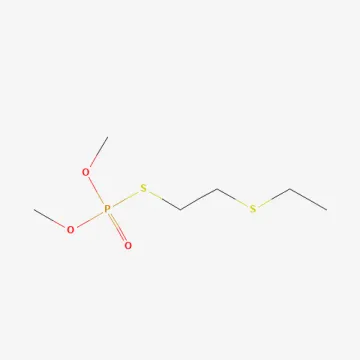
Demeton-S-methyl
Description
Mode of action
Demeton-S-methyl belongs to the organophosphate class of chemicals. It acts primarily as a potent systemic insecticide and acaricide, capable of being absorbed into plant tissues.
The mode of action involves the irreversible inhibition of the enzyme acetylcholinesterase within the insect's nervous system. This disruption causes an accumulation of acetylcholine, leading to continuous nerve impulse transmission, paralysis, and death.
Once applied, the substance is translocated through the plant's vascular system, moving acropetally. This systemic distribution allows the insecticide to reach parts of the plant that may not have been directly covered by the spray solution.
This compound demonstrates both contact and stomach poison activity, making it effective against pests that inhabit the underside of leaves or feed on plant sap internally.
It provides a significant residual effect, protecting new growth for a period of several weeks, depending on the plant species and growth rate at the time of application.
What it targets
Demeton-S-methyl is primarily used to control a broad range of sap-sucking pests. It is highly effective against aphids, spider mites, thrips, and various species of leafhoppers.
It is commonly utilized on field crops, vegetables, and fruit orchards where sap-sucking pests pose a threat to plant vigor and total crop yields.
Rates and timing
Application rates vary based on the specific crop and the severity of pest infestation. Treatments are usually initiated upon the first signs of pest colonization to prevent population outbreaks.
Thorough coverage is essential, even though the insecticide is systemic, to ensure rapid uptake into the plant's translocation system for immediate systemic protection.
Restrictions
Due to its high toxicity to mammals and non-target species, especially pollinators, strict handling precautions are required. Personal protective equipment is mandatory for all personnel involved in application.
Stringent pre-harvest intervals must be followed to ensure that residue levels in food products comply with safety regulations and food quality standards.
Status in the European Union
Not approved in the EU
- CAS number
- 919-86-8
- Category (EU)
- IN - Insecticide
EU status is for reference only and does not replace national registration in your country.