
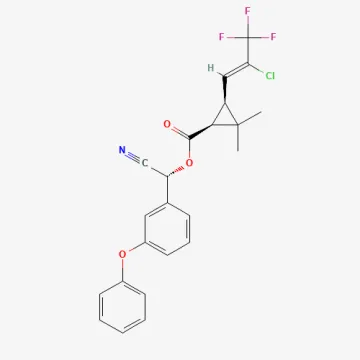
Cyhalothrin
Description
Mode of action
Cyhalothrin belongs to the chemical class of second-generation synthetic pyrethroids. It is a contact and stomach-action insecticide that targets the nervous system of harmful insects.
The mode of action is based on disrupting the permeability of sodium channels in nerve cell membranes. This causes membrane depolarization and excessive release of acetylcholine during the transmission of nerve impulses.
As a result, insects experience paralysis of all organs, accompanied by convulsions, leading to rapid death soon after contact with the treated surface or ingestion of the substance.
The substance exhibits high initial activity (a "knockdown effect"), which allows for the rapid cessation of insect feeding and prevents damage to plant vegetation.
Preparations based on cyhalothrin do not possess systemic properties, so their effectiveness is directly dependent on the quality of coverage of the plant surface with the spray solution.
What it targets
Cyhalothrin is used to eliminate a wide range of chewing and sucking pests. It is effective against various species of aphids, thrips, bugs, and leaf beetles.
The preparation shows excellent results in controlling Lepidoptera, including various species of cutworms, moths, and leafrollers at the larval stage.
It is successfully used to control populations of Orthoptera, particularly locusts, which pose a serious threat to cereal crops and pastures.
Due to its versatility, this group of substances is effective against beetles, including weevils, cereal leaf beetles, and ground beetles that damage cereals.
- Aphids and psyllids
- Cutworms and moths
- Stink bugs
- Locusts
- Weevils and beetles
Rates and timing
The application rates of the active substance vary depending on the crop, pest population density, and weather conditions during the application of the preparation.
Treatments are usually carried out during the growing season upon the first signs of pest infestation, ensuring complete and uniform wetting of the leaf surface.
Spray solutions are prepared immediately before use according to the manufacturer's regulations, taking into account the optimal water consumption for the specific agrotechnology.
At high temperatures, the effectiveness of pyrethroids may decrease, so it is recommended to perform spraying in the morning or evening hours in the absence of strong wind.
The interval between treatments should be at least 10–14 days, and insecticides from different chemical groups should be alternated to prevent the development of resistance.
Restrictions
Cyhalothrin is highly toxic to bees and other beneficial pollinating insects; therefore, the use of the preparation is strictly prohibited during the flowering period of crops.
It is forbidden to carry out treatments near water bodies, as this substance poses a high risk to aquatic organisms and fish, exhibiting significant toxicity in the aquatic environment.
When working with the preparation, it is necessary to strictly observe safety rules, using personal protective equipment for skin, respiratory organs, and eyes.
After spraying, established pre-harvest intervals must be observed, as specified in the instructions for the specific product.
It is not recommended to exceed the maximum permitted number of treatments per season to avoid the accumulation of chemical residues in produce and the environment.
Status in the European Union
Not approved in the EU
- CAS number
- 91465-08-6
- Category (EU)
- IN - Insecticide
- ADI
- 0.005 mg/kg bw/day
EU status is for reference only and does not replace national registration in your country.