
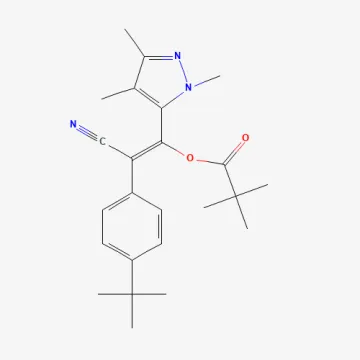
Cyenopyrafen
Description
Mode of action
Cyenopyrafen belongs to the pyrazole chemical class and is a specialized active ingredient known for its potent acaricidal activity. It acts against pests through both contact and ingestion, providing reliable control in various agricultural settings.
The mechanism of action involves the inhibition of mitochondrial electron transport, specifically at complex II, which disrupts the oxidative phosphorylation process. This leads to the cessation of vital metabolic processes, ultimately causing the death of the mites.
A key characteristic of this compound is its high selectivity. It effectively targets harmful mite species while maintaining a favorable profile regarding many beneficial insects and natural predators, which is essential for integrated pest management.
Cyenopyrafen exhibits strong translaminar activity, meaning it can penetrate leaf tissues. This capability allows the product to control mites residing on the underside of leaves, which are often protected from conventional contact sprays.
The substance is known for its rapid "knockdown effect," which inhibits the feeding behavior of mites shortly after exposure. While feeding stops almost immediately, the total elimination of the pest population may take several days depending on environmental factors.
What it targets
The primary use of Cyenopyrafen is to control phytophagous mites of the Tetranychidae family. It is highly effective against various spider mite species that cause significant damage to high-value agricultural and horticultural crops.
The active ingredient is effective against all developmental stages of mites, including eggs, larvae, nymphs, and adults. This comprehensive activity helps to reduce population numbers rapidly and prevents quick recovery of the pest population.
The product is widely used in both protected greenhouse environments and open-field cultivation. It is particularly valued in intensive farming systems where maintaining crop quality and preventing yield loss is of utmost importance.
Cyenopyrafen serves as a vital tool in anti-resistance management programs. Because it operates through a distinct biochemical mechanism compared to traditional organophosphates or other older classes, it provides a solution for managing resistant mite populations.
- Two-spotted spider mite
- European red mite
- Cyclamen mite
- Flat mites (Tenuipalpidae)
Rates and timing
Application rates depend on the specific crop, the level of infestation, and local climate conditions. It is essential to ensure thorough coverage of the plant canopy to achieve the best possible acaricidal efficacy.
Pre-harvest intervals (PHI) must be strictly followed as per the manufacturer's label to ensure food safety. As the substance penetrates plant tissues, it is crucial to avoid application close to harvest dates to prevent residues.
To prevent the development of pesticide resistance, it is highly recommended to rotate the use of Cyenopyrafen with acaricides that feature different modes of action. This is a critical agricultural practice for long-term efficacy.
Treatments are most effective when applied at the first signs of mite presence. Early intervention minimizes the required volume of the product and prevents the irreversible damage caused by established populations of spider mites.
The working solution should be prepared immediately before use and mixed thoroughly to ensure uniformity. Using clean water and maintaining proper pH levels for the tank mix can enhance the stability and performance of the application.
Restrictions
Safety precautions during application include the mandatory use of personal protective equipment (PPE), such as gloves, goggles, and respiratory protection. Avoiding inhalation of spray mist and direct skin contact is essential for operator safety.
Access to the treated area should be restricted for humans and livestock for the period specified by local regulations. Personal hygiene, such as washing hands and face after handling the product, is a basic safety requirement.
Cyenopyrafen is toxic to aquatic life, and care must be taken to prevent spray drift into water bodies or sensitive non-target areas. Avoid application during periods of high bee activity or strong winds to mitigate environmental risks.
Storage should be in the original, sealed containers within a cool, dry, and well-ventilated area, away from the reach of children. It should be kept separate from food, feed, and other incompatible materials.
Disposal of empty containers and leftover product must comply with local environmental regulations. Improper disposal can lead to soil and water contamination, so follow all guidelines for the safe removal of pesticide waste.
Status in the European Union
Not approved in the EU
- CAS number
- 560121-52-0
- Category (EU)
- IN - Insecticide
EU status is for reference only and does not replace national registration in your country.