
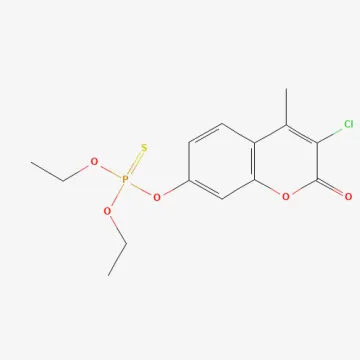
Coumaphos
Description
Mode of action
Coumaphos belongs to the organophosphate (OP) class of compounds, acting as a systemic and contact insecticide and acaricide.
Its mechanism of action is based on the inhibition of the enzyme acetylcholinesterase in the nervous system of arthropods.
Blocking this enzyme leads to the accumulation of acetylcholine in synapses, causing continuous nerve impulse transmission.
As a result, parasites experience paralysis, which rapidly leads to their death.
This substance exhibits significant toxicity toward a broad spectrum of ectoparasites, making it a powerful tool in veterinary practice.
What it targets
Coumaphos is primarily used to control ticks, lice, biting lice, and fly larvae.
The main area of application is the protection of livestock, such as cattle, sheep, and swine.
The substance is also employed in apiculture for the control of varroosis (the mite Varroa destructor).
The product effectively destroys both adult parasites and their larval stages, depending on the concentration used.
Its effectiveness against a wide range of arthropods allows it to be used for the prophylactic treatment of both facilities and the animals themselves.
Rates and timing
Application rates for coumaphos vary depending on the target animal species and the type of infestation.
For animal treatment, aqueous emulsions or suspensions are used via spraying or dipping methods.
In beekeeping, special strips or fumigation products are used, which are placed in hives for a specific duration.
Strict adherence to time intervals between treatments is critical to prevent the accumulation of residues in animal products.
Clear regulations are established for each type of treatment to exclude overdosing, which could be harmful to animal health.
Restrictions
Working with coumaphos requires strict adherence to safety protocols, as the substance is highly toxic.
Treatment of lactating animals is prohibited if the milk is intended for human consumption without restrictions.
It is essential to strictly observe waiting periods before slaughtering animals for meat to prevent residues from entering the human food chain.
Personnel must use personal protective equipment, including gloves, respirators, and protective clothing, to avoid contact with skin and mucous membranes.
Disposal of product residues and containers must comply with environmental regulations to prevent the contamination of water resources.
Status in the European Union
Not approved in the EU
- CAS number
- 56-72-4
- Category (EU)
- IN - Insecticide
EU status is for reference only and does not replace national registration in your country.