
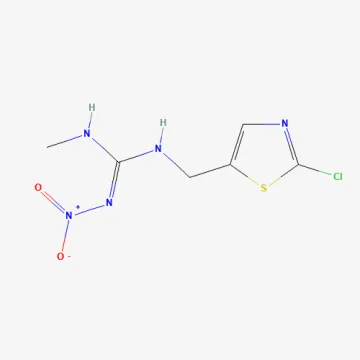
Clothianidin
Description
Mode of action
Clothianidin is a highly effective systemic insecticide belonging to the neonicotinoid chemical class. It is characterized by its ability to be rapidly absorbed by plant tissues, providing prolonged internal protection against a variety of pests.
The mode of action involves the selective binding to nicotinic acetylcholine receptors in the insect central nervous system. This causes persistent activation of the receptors, leading to nerve impulse failure, paralysis, and death of the target organism.
Due to its systemic properties, clothianidin is transported through the plant's xylem, reaching new growth and ensuring consistent protection throughout the vulnerable stages of plant development.
The compound remains stable and active under a wide range of environmental conditions, including variations in temperature and humidity, which ensures reliability in field applications.
As a contact and ingestion insecticide, it acts quickly once the pest starts feeding or comes into contact with treated plant surfaces, effectively reducing initial pest populations.
What it targets
Clothianidin is widely utilized to control a broad spectrum of insect pests, particularly those that pose a threat to early-stage crops and underground root systems.
It is exceptionally effective against soil-dwelling insects, such as wireworms, white grubs, and other coleopteran larvae that can cause significant damage to germinating seeds.
The insecticide also provides strong control over sucking insects, including aphids, leafhoppers, and whiteflies, which are notorious for transmitting viral plant pathogens.
Many beetles and flea beetles that attack cereal crops, maize, and oilseed rape during emergence are effectively managed using seed treatments containing this active ingredient.
- Wireworms
- Aphids
- Leafhoppers
- Flea beetles
- Whiteflies
Rates and timing
The most common application method for clothianidin is as a seed treatment, ensuring the protection of seedlings from the very moment of germination and early development.
Application rates are determined by the crop type, target pest pressure, and soil characteristics. Standard commercial formulations are tailored to ensure uniform coverage of seeds to optimize systemic uptake.
For foliar applications, the concentration must be carefully calibrated to ensure even distribution across the foliage. The use of modern spraying equipment is highly recommended to prevent drift.
Integration into Integrated Pest Management (IPM) programs is essential. Application should be timed based on scouting results rather than preventative use to reduce selection pressure for resistance.
Adherence to pre-harvest intervals (PHI) is mandatory to ensure that residue levels in the final harvested products remain within legal and safety limits set by regulatory bodies.
Restrictions
Clothianidin poses a significant risk to non-target pollinators, especially honeybees. Its use during the flowering period is strictly prohibited to prevent environmental harm.
Buffer zones around fields must be maintained to minimize the impact on surrounding ecosystems and avoid contaminating non-agricultural habitats or water sources.
The compound is classified as highly toxic to aquatic life. Strict measures must be taken to prevent runoff, leaching, or spray drift into ponds, rivers, or irrigation systems.
Personal Protective Equipment (PPE) including chemical-resistant gloves, respirators, and eye protection is mandatory for all handlers and operators to prevent accidental exposure.
Proper storage and disposal of product containers are essential. Leftover chemicals must never be dumped into the environment; they must be handled through licensed waste management facilities.
Status in the European Union
Not approved in the EU
- CAS number
- 210880-92-5
- Category (EU)
- IN - Insecticide
- Approved from
- 01.08.2006
- Approval until
- 31.01.2019
- ADI
- 0.097 mg/kg bw/day
- ARfD
- 0.1 mg/kg bw
- AOEL
- 0.1 mg/kg bw/day
EU status is for reference only and does not replace national registration in your country.