
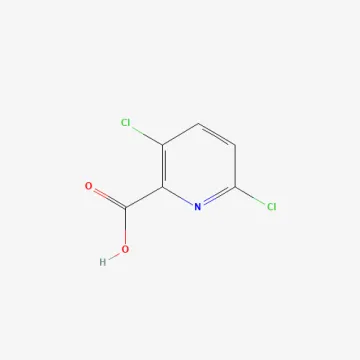
Clopyralid
Description
Mode of action
Clopyralid belongs to the pyridine carboxylic acid chemical class. It is a selective systemic herbicide that acts primarily through foliar absorption, although it can also be absorbed by the roots.
The active substance mimics the effect of auxins, which are natural plant growth hormones. This results in uncontrolled cell division and metabolic disruption, causing distinct twisting, curling, and abnormal growth in susceptible weeds.
Due to its high systemic mobility, clopyralid is translocated through both the phloem and xylem to the meristematic tissues, ensuring the effective destruction of the entire root system of perennial weeds.
Clopyralid remains effective even in cooler conditions, which makes it an ideal choice for early-season weed management programs in cereal and other field crops.
Visible symptoms of plant death appear within a few days of application, leading to complete control of target weeds within one to three weeks depending on environmental conditions.
What it targets
Clopyralid is widely recognized as a gold-standard herbicide for controlling persistent perennial broadleaf weeds, particularly those with deep taproots.
It provides excellent control against a wide spectrum of annual and perennial weeds belonging to the Asteraceae (Compositae), Fabaceae, and Polygonaceae families.
- Canada thistle (Cirsium arvense).
- Perennial sow thistle (Sonchus arvensis).
- Chamomile species.
- Smartweed and knotweed species.
- Cornflower.
The herbicide is highly selective, meaning it poses minimal risk to grasses and cereal crops, allowing for safe application in wheat, barley, and maize fields.
Broadleaf crops, particularly legumes and solanaceous plants, are extremely sensitive to clopyralid, which necessitates strict adherence to application boundaries to prevent crop damage.
Rates and timing
Application rates for clopyralid typically range from 60 to 300 grams of active ingredient per hectare, depending on the specific weed species and the crop growth stage.
In cereal crops, the best results are achieved when application occurs between the tillering stage and the stem elongation phase, while weeds are in the rosette stage.
For maize crops, treatment should be timed when the weeds are in the 2–6 leaf stage and the crop itself has reached the 3–5 leaf stage to ensure optimal selectivity.
When applying to specialized crops like flax or canola, strict crop growth stage guidelines must be followed to avoid any risk of developmental abnormalities in the harvestable parts.
Achieving uniform coverage of the target weeds is crucial; therefore, a standard spray volume of 200–400 liters per hectare is generally recommended to ensure efficacy.
Restrictions
Clopyralid has a relatively long soil half-life. Under dry conditions, residues may persist in the soil until the next season, which significantly restricts the choice of subsequent crops in the rotation.
Planting sensitive crops like sunflowers, peas, or potatoes in fields treated with clopyralid in the previous season is strictly prohibited due to the risk of phytotoxicity.
Drift management is essential when applying clopyralid near sensitive crops or greenhouse vegetable operations, as even trace amounts can lead to severe crop deformation.
Plant residues (straw or manure) from fields treated with clopyralid should not be used as compost or mulch for sensitive plants, as the herbicide can remain active in organic matter.
Avoid applying the herbicide during periods of extreme heat or frost, as these environmental stressors limit plant uptake and metabolic activity, ultimately reducing the product's effectiveness.
Status in the European Union
Approved in the EU
- CAS number
- 1702-17-6
- Approved from
- 01.10.2021
- Approval until
- 30.09.2036
- ADI
- 0.15 mg/kg bw/day
- ARfD
- 0.17 mg/kg bw
- AOEL
- 0.15 mg/kg bw/day
EU status is for reference only and does not replace national registration in your country.