
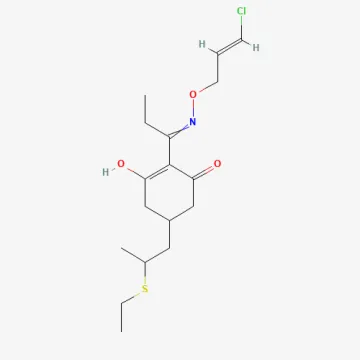
Clethodim
Description
Mode of action
Clethodim is a high-efficacy systemic herbicide belonging to the cyclohexanedione chemical class, primarily used for grass weed control.
The active ingredient is rapidly absorbed through the leaves and translocated throughout the plant via the phloem and xylem vessels.
Its primary mode of action involves the inhibition of acetyl-CoA carboxylase (ACCase), an essential enzyme for fatty acid biosynthesis in plant cells.
By blocking lipid production, clethodim halts growth in the meristematic tissues, leading to the collapse of the weed's development.
Complete necrosis of the plant typically occurs within one to three weeks following application, depending on the weed species and environmental conditions.
What it targets
Clethodim is highly effective against a wide range of annual and perennial grass weeds, including some of the most persistent field pests.
It targets species such as barnyard grass, green foxtail, wild oats, crabgrass, and common couch grass with high levels of control.
The herbicide does not show activity against broadleaf weeds, which allows it to be used selectively in various cropping systems.
It is widely applied on broadleaf crops, including soybeans, sunflowers, canola, sugar beets, potatoes, and various vegetable crops.
Due to its high selectivity, it poses no risk of phytotoxicity to the tolerant broadleaf crops when applied according to label instructions.
Rates and timing
Application rates vary based on the stage of weed development, the target species, and the level of infestation present in the field.
For annual grasses, it is most effective when applied at the 2–6 leaf stage while the plants are actively growing and vulnerable.
Perennial grass species, such as couch grass, should be targeted when they have reached a height of 10 to 15 centimeters for optimal translocation.
The inclusion of a surfactant or oil adjuvant is essential to enhance the penetration of the herbicide through the weed's leaf cuticle.
Consult local agricultural guidelines to determine the precise dosage, as environmental factors play a significant role in determining efficacy.
Restrictions
Avoid application under stress conditions such as extreme heat, drought, or cold, as this significantly reduces the uptake and efficacy of the herbicide.
Potential antagonism may occur when clethodim is mixed with broadleaf herbicides, which may require separate applications or adjusted intervals.
A time interval of several days between clethodim application and other pesticide treatments is recommended to maximize performance.
Operators must wear appropriate personal protective equipment during handling and application to prevent dermal or respiratory exposure.
Ensure that drift is minimized and avoid applying the product near sensitive habitats or non-target grass species to prevent unintended damage.
Status in the European Union
Approved in the EU
- CAS number
- 99129-21-2
- Approved from
- 01.06.2011
- Approval until
- 31.08.2026
- ADI
- 0.16 mg/kg bw/day
- ARfD
- Not appl.
- AOEL
- 0.2 mg/kg bw/day
EU status is for reference only and does not replace national registration in your country.