
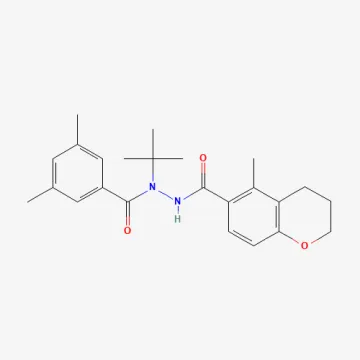
Chromafenozide
Description
Mode of action
Chromafenozide is an insecticide belonging to the diacylhydrazine chemical class, acting as a potent ecdysone agonist. It is designed to mimic the natural molting hormone found in insects.
Once ingested by a target pest, the compound triggers a hormonal response that forces the larva to initiate a premature and unsuccessful molting process. This physiological disruption prevents the larva from completing its life cycle, leading to death.
A key advantage of this mode of action is its selectivity. It primarily targets Lepidoptera species while exhibiting minimal impact on many beneficial insects, including predators and parasitoids.
The substance functions through both contact and ingestion. However, the most lethal effect occurs when larvae feed on treated leaf tissues, making the stomach action critical to its performance.
An immediate cessation of feeding occurs following ingestion, which effectively halts crop damage even before the larvae succumb to the biological effects of the molting disruption.
What it targets
Chromafenozide is used for the management of a wide range of Lepidoptera pests that affect various agricultural, horticultural, and ornamental crops.
Major targets include leaf-feeding caterpillars such as armyworms, cutworms, leafrollers, and codling moths, which are known for causing extensive economic damage.
The compound is particularly effective against mining insects that dwell inside leaf tissues, where traditional surface-contact insecticides often fail to reach the pests.
It is most effective against younger larval stages, as these stages are more susceptible to the disruption of their hormonal balance.
This insecticide serves as a vital tool in integrated pest management programs, especially for controlling pest populations that have developed resistance to organophosphates or pyrethroids.
Rates and timing
Application rates for chromafenozide vary based on the specific crop, the pressure of the pest population, and the developmental stage of the plants; product labels must be strictly followed.
Timing the application to coincide with the onset of egg hatching or early larval development is crucial for maximizing the efficacy of this growth regulator.
Ensuring thorough spray coverage is essential, as the effectiveness of the treatment relies heavily on the larvae consuming the active ingredient during their feeding activity.
To mitigate the risk of resistance development, it is recommended to rotate the use of chromafenozide with insecticides that possess different modes of action.
Adherence to pre-harvest intervals is mandatory to ensure that the final agricultural product meets residue safety standards and is safe for consumer use.
Restrictions
Users must wear appropriate personal protective equipment (PPE), including chemical-resistant gloves and eye protection, to prevent accidental skin or respiratory exposure during mixing and application.
Environmental precautions must be taken to prevent the chemical from leaching into water bodies, as it may pose risks to aquatic organisms if mismanaged.
Although it is generally considered safer for beneficial insects than broad-spectrum poisons, applications during peak flowering periods should be avoided to protect local pollinator populations.
All containers must be stored in a cool, dry, and secure location, kept away from the reach of children, livestock, and unauthorized individuals.
Disposal of unused product and empty containers must follow established environmental regulations to avoid soil and groundwater contamination.
Status in the European Union
Not approved in the EU
- CAS number
- 143807-66-3
- Approved from
- 01.04.2015
- Approval until
- 31.03.2025
- ADI
- 0.27 mg/kg bw/day
- ARfD
- Not appl.
- AOEL
- 0.26 mg/kg bw/day
EU status is for reference only and does not replace national registration in your country.