
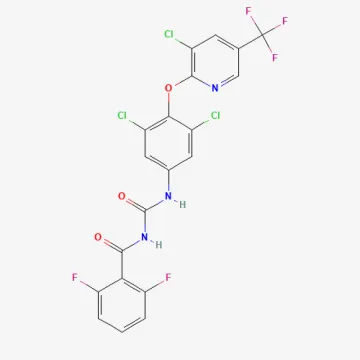
Chlorfluazuron
Description
Mode of action
Chlorfluazuron belongs to the benzoylurea chemical class. It acts as a specialized insect growth regulator (IGR) that fundamentally disrupts the developmental processes of target insect species.
The primary mechanism of action involves the inhibition of chitin synthesis. Chitin is a crucial structural component of the insect exoskeleton, and by blocking its production, the insect fails to develop correctly.
When larvae ingest the substance or come into contact with treated surfaces, they become unable to complete the molting process. This leads to physical deformities, loss of motility, and eventually mortality.
Chlorfluazuron also exhibits significant ovicidal properties. By affecting the embryonic development within the egg, it prevents the larvae from hatching, which effectively breaks the pest's life cycle at the very beginning.
The compound is highly stable when applied to plant surfaces. Its resistance to wash-off by rain ensures a long-lasting residual effect, which is vital for protecting crops throughout critical growth stages.
What it targets
Chlorfluazuron is highly effective against a wide range of Lepidoptera. It is a key tool in controlling various moth and butterfly larvae that cause extensive damage to leaves and stems.
The insecticide also shows efficacy against specific Coleoptera and Diptera species. It helps in managing populations of beetles and leaf-miners that threaten agricultural and horticultural yields.
It is widely used on various vegetable crops, including cabbage, tomatoes, and peppers, to prevent feeding damage that renders produce unmarketable due to aesthetic and physical injury.
In orchards, chlorfluazuron is essential for controlling codling moths and other fruit-boring insects. Its systemic effect helps in stopping larvae before they can penetrate deep into the fruit tissue.
Due to its selective mode of action, it can be integrated into broader Integrated Pest Management (IPM) programs, provided that application timing is carefully managed to protect beneficial organisms.
Rates and timing
Application rates for chlorfluazuron vary depending on the target crop and pest pressure. Typically, rates range from 0.1 to 0.2 kg of active ingredient per hectare, depending on specific formulations.
The timing of application is critical for success. It is most effective when applied during the peak of egg-laying or when first-instar larvae are actively feeding, as this maximizes the biological impact.
To avoid the buildup of resistance, it is recommended to rotate chlorfluazuron with insecticides that have different modes of action, ensuring long-term control of the targeted pest populations.
Uniform coverage is necessary to ensure the pest consumes a sufficient amount of the product. High-quality spray equipment is recommended to achieve thorough distribution across the canopy.
While generally considered less toxic to non-target adults, application should be avoided during peak bee activity hours to comply with safety regulations and minimize risks to local pollinators.
Restrictions
A key limitation of chlorfluazuron is its slow initial killing speed. It does not provide immediate "knockdown," which may lead users to mistakenly perceive a lack of efficacy during the first few hours.
Chlorfluazuron does not provide systemic protection for new plant growth occurring after application. New leaves and shoots remain vulnerable unless follow-up applications are performed as needed.
Temperature during application can influence results. Performance is generally optimal between 15°C and 25°C, as extreme temperatures may impact the stability and uptake of the compound by the target insects.
Pre-harvest intervals (PHI) must be strictly observed. Always consult the label of the specific product for the exact waiting period required to ensure residues are within safe limits for consumers.
Storage should be in original containers, kept in a cool, dry, and well-ventilated location. Avoid contact with strong bases or oxidizing agents, which may trigger chemical degradation of the active ingredient.
Status in the European Union
Not approved in the EU
- CAS number
- 71422-67-8
- Category (EU)
- IN - Insecticide
EU status is for reference only and does not replace national registration in your country.