
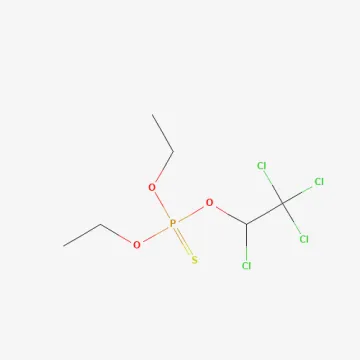
Chlorethoxyfos
Description
Mode of action
Chlorethoxyfos belongs to the organophosphate chemical class, functioning as a contact and stomach insecticide used in agricultural pest management.
The primary mechanism of action involves the irreversible inhibition of the enzyme acetylcholinesterase, a critical component in the nervous system of insects.
This biochemical blockage causes an accumulation of the neurotransmitter acetylcholine, leading to continuous nerve impulse transmission that causes paralysis and death.
The substance is formulated to remain stable in the soil profile, which allows it to effectively target subterranean pests that thrive in root zones.
Its high efficacy ensures immediate impact on target organisms, making it a reliable tool for protecting newly sown crops from early-stage damage.
What it targets
Chlorethoxyfos is specifically designed to manage soil-dwelling pests that attack seeds, roots, and the basal stems of various agronomic crops.
A major target group includes wireworms, the larvae of click beetles, which are notorious for causing stand loss in maize, cereals, and sugar beet.
Additionally, the insecticide provides control over various Scarabaeidae larvae, such as white grubs, which feed aggressively on the root systems of young plants.
By neutralizing these pests, the treatment helps to maintain optimal plant density and ensures that young seedlings establish a healthy and robust root structure.
The targeted use of this substance serves as a critical defense measure for crops grown in fields with high pest pressure histories.
Rates and timing
The product is typically applied in granular form, often through specialized granular applicators mounted on precision planting equipment.
Application rates are determined based on soil type, pest population density detected during pre-sowing soil surveys, and specific crop requirements.
Placement of the granules directly into the seed furrow is essential to create a "protection zone" that guards the seed and emerging roots from attack.
Timing is strictly linked to the sowing process to ensure the maximum chemical concentration is available when the risk of pest damage is at its highest.
Precise calibration of the application equipment is necessary to ensure consistent distribution and avoid potential phytotoxicity caused by localized overdosing.
Restrictions
Due to its high toxicity to mammals, chlorethoxyfos requires rigorous adherence to safety protocols and the use of approved personal protective equipment.
Operators must prevent any direct exposure, including skin contact or inhalation, and strictly follow label instructions for storage and handling.
The substance poses significant risks to aquatic life and beneficial insects; therefore, application near water bodies and foraging areas for bees is prohibited.
Observance of harvest intervals is mandatory to guarantee that residues in harvested products remain well below the regulatory safety thresholds.
Proper waste management for containers and unused chemical amounts is required to prevent soil and water contamination according to local environmental laws.
Status in the European Union
Not approved in the EU
- CAS number
- 54593-83-8
- Category (EU)
- IN - Insecticide
EU status is for reference only and does not replace national registration in your country.