
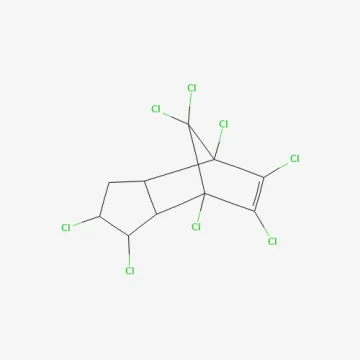
Chlordane
Description
Mode of action
Chlordane belongs to the group of organochlorine compounds, which act as broad-spectrum contact and stomach insecticides.
The mechanism of action is based on disrupting nerve impulse transmission in insects, leading to hyperexcitability, paralysis, and death.
Formulations based on this substance act as neurotoxins by affecting sodium channels in nerve cell membranes, resulting in persistent depolarization.
Due to its high chemical stability, the substance possesses a long residual effect in the soil and on treated surfaces.
Given its high potential for bioaccumulation in living organisms, chlordane metabolism in tissues is extremely slow, which accounts for its high toxicity.
What it targets
Historically, chlordane was used to control various soil-dwelling pests, including beetle larvae, wireworms, and cutworm caterpillars.
It was also effectively used for wood protection against termites and other xylophagous insects, preventing structural damage.
In agriculture, it was applied to cereal crops, corn, vegetables, and orchards to control insect population densities.
It was widely utilized for the control of ants, grasshoppers, and other pests inhabiting the upper soil layers.
In modern conditions, its use against pests is almost entirely banned worldwide due to environmental safety concerns.
Restrictions
Chlordane is included in the Stockholm Convention on Persistent Organic Pollutants, making its production and use illegal in most countries.
The substance is extremely hazardous to the environment, as it can be transported over long distances and accumulate in food chains.
For humans, chlordane poses a serious threat through inhalation, ingestion, or skin absorption, exhibiting carcinogenic properties.
If old stockpiles are discovered, strict hazardous waste disposal protocols must be followed to prevent soil and groundwater contamination.
- Prohibition of agricultural use.
- High toxicity to aquatic organisms.
- Risk of accumulation in plant products.
Status in the European Union
Not approved in the EU
- CAS number
- 12789-03-6
EU status is for reference only and does not replace national registration in your country.