
Chlorbenside
Description
Mode of action
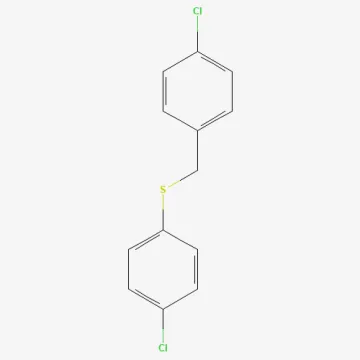
Chlorbenside belongs to the organochlorine group of compounds, known for its strong acaricidal activity. Chemically, it is a dichlorobenzyl chlorophenyl sulfide that functions primarily as a contact poison.
Its biological mode of action targets the vital processes of pests at various stages of development. It effectively acts against mite eggs, larvae, and protonymphs, preventing them from reaching the adult stage.
The substance is characterized by low volatility and good persistence on plant surfaces, which provides a prolonged protective effect for several weeks after application.
It does not possess systemic activity; therefore, thorough coverage of the entire leaf surface, including the undersides, is critical to achieving maximum efficacy.
The compound disrupts the metabolism of arthropods, leading to a gradual decline in pest populations, while demonstrating selectivity against specific mite species.
What it targets
The primary use of chlorbenside is the control of phytophagous mites (Acarina), which cause significant economic damage to agricultural crops.
It is effective against common pests such as the two-spotted spider mite and other species that damage fruit trees and ornamental shrubs.
- European red mite
- Brown mite
- Spider mite
Applying this substance helps prevent leaf chlorosis and premature defoliation caused by mite infestations on plantations.
The use of chlorbenside is justified during periods of rapid mite reproduction when pest population density exceeds the economic injury level.
Rates and timing
Application rates for the product vary depending on the crop type, the spraying equipment used, and the level of pest pressure on the plants.
The optimal time for application is during the growing season when the first signs of mite colonization appear on the plants.
To ensure uniform distribution, it is recommended to use high-quality spray nozzles that provide a fine dispersion of the working solution.
The number of treatments per season is strictly regulated by agronomic guidelines to prevent the accumulation of residues in the harvested produce.
It is important to consider weather conditions; spraying is best performed during early morning or evening hours, avoiding high wind and rain to ensure better adhesion to the leaves.
Restrictions
Chlorbenside is a moderately toxic compound; therefore, personal protective equipment for the respiratory tract, eyes, and skin must be used when handling it.
Treatment during the crop flowering period is strictly prohibited if bees are actively foraging in the field to prevent their mortality.
There are strict pre-harvest intervals (PHI) between the final treatment and crop harvest, which must be observed to ensure food safety for consumers.
Repeated use may lead to the development of resistance in mite populations; therefore, it is advised to rotate chlorbenside with acaricides from other chemical classes.
The product must be stored in its original packaging in a dry, cool, and well-ventilated warehouse, kept out of the reach of children and animals.
Status in the European Union
Not approved in the EU
- CAS number
- 103-17-3
EU status is for reference only and does not replace national registration in your country.