
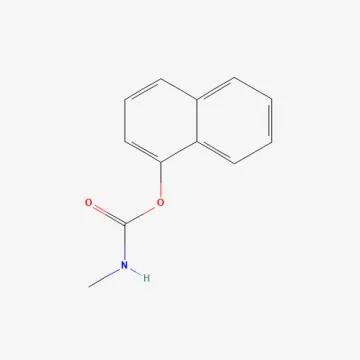
Carbaryl
Description
Mode of action
Carbaryl is a well-known insecticide belonging to the carbamate chemical family. It functions primarily by inhibiting the enzyme acetylcholinesterase, which is vital for the nervous system of insects.
By interfering with the transmission of nerve impulses, the chemical causes the victim to experience paralysis and eventual death within a short period after exposure.
The substance acts primarily through contact and ingestion. It is effective both when the insect touches the treated surface and when it consumes plant material containing the residues of the active ingredient.
One of the distinctive features of carbaryl is its residual activity, which offers a period of continued protection against further pest infestations on treated foliage.
It is known for a rapid knockdown effect, which is critical when dealing with sudden population outbreaks that threaten the survival of young crops.
What it targets
Carbaryl is utilized to manage a wide range of pests across various agricultural, horticultural, and ornamental plant species.
It is particularly effective against many lepidopteran larvae, beetles, and orthopterans that pose significant damage to leafy greens, fruits, and grains.
Specific examples of controlled pests include the Colorado potato beetle, various species of leafrollers, grasshoppers, and certain types of aphids.
Because of its efficacy against many chewing insects, it is frequently used in orchards to prevent damage to fruit, contributing to higher yield quality.
Users should note that while it covers a broad spectrum, it is not considered an effective control for spider mites or other arachnids.
Rates and timing
Application rates for carbaryl depend on the specific crop variety and the severity of the pest pressure observed in the field.
It is essential to consult the product label for precise dilution instructions and the required volume of water to ensure even coverage across the canopy.
Timing of application is crucial; it should be performed when pests are at their most vulnerable life stage for the best economic return.
Pre-harvest intervals (PHI) must be strictly followed to ensure that food safety standards are met and residual chemical levels are within legal limits.
Frequent rotation with insecticides possessing different modes of action is highly recommended to delay the development of resistance in target pest populations.
Restrictions
Carbaryl is highly toxic to honeybees and other beneficial pollinators. Therefore, it should never be applied during the blooming period of crops.
Personal Protective Equipment (PPE) is mandatory during the mixing and application processes to prevent dermal or respiratory exposure to the operator.
Care should be taken to prevent drift, as the compound can be harmful to aquatic life if it enters streams, ponds, or other water sources.
Storage must be in a cool, dry, and secure location, away from food, feed, and children, to prevent accidental ingestion or contamination.
Proper disposal of containers and leftover spray mixtures is required by environmental regulations to minimize the footprint of the pesticide in the ecosystem.
Status in the European Union
Not approved in the EU
- CAS number
- 63-25-2
- Category (EU)
- IN - Insecticide
- ADI
- 0.0075 mg/kg bw/day
- ARfD
- 0.01 mg/kg bw
- AOEL
- 0.01 mg/kg bw/day
EU status is for reference only and does not replace national registration in your country.