
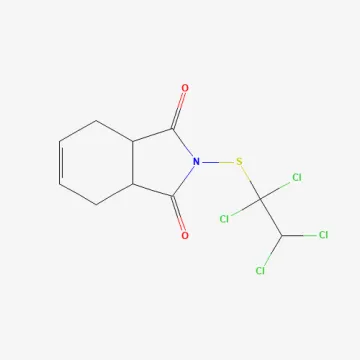
Captafol
Description
Mode of action
Captafol belongs to the phthalimide chemical class and functions as a broad-spectrum contact fungicide. It creates a protective barrier on the surface of plant parts, preventing fungal pathogens from penetrating the host tissue.
The mode of action involves the inhibition of vital metabolic processes within the pathogen's cells. Captafol interferes with the sulfhydryl groups of key enzymes, which leads to the disruption of fungal respiration and protein synthesis.
As a preventive fungicide, it is highly effective at stopping spore germination on the leaf surface. By inhibiting the development of the mycelium before infection occurs, it provides a crucial first line of defense for crops.
The chemical's high lipophilicity allows it to adhere well to the plant surface. Once the spray solution dries, it forms a persistent film that is resistant to washing off by rainfall, ensuring a long-lasting protective effect.
To maximize the efficacy of this fungicide, uniform application is essential. Growers must ensure thorough coverage of all vulnerable plant surfaces, as the product does not have systemic properties and cannot relocate within the plant.
What it targets
Captafol has been widely utilized in various agricultural sectors to manage a broad range of fungal pathogens. Its contact activity makes it useful against various foliage and fruit diseases across different crop categories.
It was primarily used to protect vegetable crops from late blight, particularly in high-humidity conditions where fungal outbreaks are common. Its ability to prevent disease establishment significantly reduced field losses.
In orchards, the substance was applied to manage apple and pear scab, as well as other fruit-rotting fungi. These applications helped to improve the overall quality and post-harvest durability of the harvested produce.
The fungicide also served a role in protecting grapes from downy mildew and various berry crops from grey mold infections. It was an essential tool in integrated pest management programs prior to regulatory changes.
- Late blight on potatoes and tomatoes.
- Apple and pear scab.
- Downy mildew (plasmopara viticola).
- Various leaf spots and fruit rots.
Restrictions
The use of Captafol is currently severely restricted or banned in many regions due to significant toxicological concerns and potential risks to human health and environmental safety.
Exposure to the substance can cause severe skin irritation, dermatitis, and mucosal sensitivity. Consequently, rigorous adherence to personal protective equipment (PPE) protocols, including gloves, goggles, and respiratory masks, is mandatory during handling.
Environmental toxicity, particularly toward aquatic organisms, is a primary concern. Strict protocols must be followed to prevent any spray runoff, spills, or equipment rinsing from entering water bodies or drainage systems.
Waiting periods between the last application and the harvest are strictly enforced to ensure that residues in food products do not exceed established safety limits. Violating these timelines poses a health risk to consumers.
Storage of the chemical must be in dedicated, secure facilities. Containers must be tightly sealed and stored in cool, dry conditions to prevent degradation and unauthorized access, ensuring environmental compliance at all times.
Status in the European Union
Not approved in the EU
- CAS number
- 2425-06-1
EU status is for reference only and does not replace national registration in your country.