
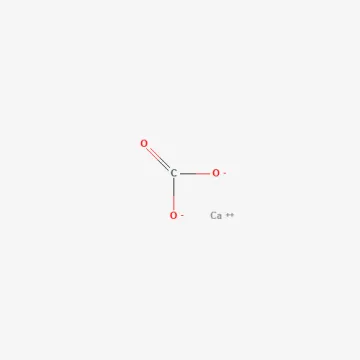
Calcium carbonate
Description
Mode of action
Calcium carbonate (CaCO₃) functions in agriculture as a mineral-based agent that provides protection through physical rather than biochemical means. It acts by forming a breathable, reflective coating on plant surfaces.
This mineral layer serves as a potent photoprotective barrier, significantly reflecting solar radiation. By reducing the heat load on leaves and fruit, it effectively prevents sunscald and heat-induced physiological stress.
As a pest control tool, calcium carbonate acts as an abrasive and irritant. When insects come into contact with the mineral particles, their cuticles become irritated, which disrupts their ability to move, feed, and survive on the plant.
The application of a mineral layer also obscures the chemical and visual cues that many insect pests use to identify host plants, effectively acting as a repellent.
Furthermore, the surface properties of the calcium carbonate coating create an alkaline environment that is less conducive to the germination and development of various fungal spores.
What it targets
The primary use of calcium carbonate is to protect sensitive horticultural crops, such as apples, peppers, and tomatoes, from solar damage during periods of high ultraviolet intensity.
It is employed to manage a range of soft-bodied pests, including aphids, whiteflies, thrips, and certain species of spider mites that are sensitive to mechanical irritation.
The substance is also utilized to improve post-harvest quality by strengthening the skin of fruits and reducing micro-cracking, which serves as an entry point for post-harvest pathogens.
Within integrated pest management (IPM) programs, it is used to suppress pest populations while preserving populations of beneficial insects and predatory mites.
It is a staple in organic farming practices due to its low toxicity profile and status as a naturally occurring, residue-free crop protection agent.
Rates and timing
Effective application requires the preparation of a concentrated suspension, typically ranging from 10 to 25 kg of product per 1000 liters of water, depending on the crop and target threat.
Applications should be made proactively before extreme heat events or the onset of pest outbreaks to ensure that a complete, uniform white film covers the target surfaces.
Re-application is necessary every 14 to 21 days, particularly during phases of rapid vegetative growth or after heavy rainfall that may wash away the mineral coating.
High-quality spray equipment is required to maintain the suspension and ensure that the nozzles do not become clogged by the mineral particles.
- Use approved stickers or surfactants to enhance the retention of the powder on waxy leaf surfaces.
- Regularly monitor the mixture's pH to ensure compatibility with other tank-mixed ingredients.
Restrictions
The presence of a visible white residue may necessitate washing the produce before marketing if the aesthetic standard of the fruit is a primary concern for the producer.
Excessive application thickness might inadvertently reduce photosynthetic efficiency by blocking light; therefore, precise calibration is essential for optimal crop performance.
Potential incompatibility with acidic pesticides exists, as the neutralizing reaction can cause precipitation within the tank, leading to equipment clogs and loss of efficacy.
Avoid applying during the bloom period to prevent interference with the mechanical processes of pollination or potential impact on the foraging behavior of bees.
Proper storage is required; the product must be kept in a dry environment, as moisture can lead to clumping, making it difficult to prepare a homogenous solution for spraying.
Status in the European Union
Not approved in the EU
- CAS number
- 471-34-1
EU status is for reference only and does not replace national registration in your country.