
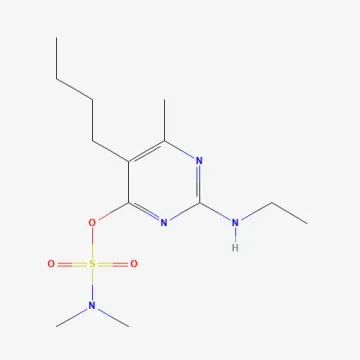
Bupirimate
Description
Mode of action
Bupirimate belongs to the pyrimidine chemical class. It is a systemic fungicide that acts both curatively and preventively against various fungal pathogens.
The mode of action involves inhibiting the spore germination and mycelial development of the pathogen. Bupirimate disrupts metabolic processes within the fungal cells, effectively stopping the spread of infection.
Due to its systemic properties, the active ingredient is rapidly absorbed by plant tissues and translocated throughout the plant. This ensures protection even for areas not directly covered by the spray.
The substance also exhibits notable fumigant action. As it evaporates from the leaf surface, bupirimate creates a protective vapor barrier that is detrimental to pathogens in hard-to-reach areas.
The compound is characterized by high selectivity, focusing its activity on specific fungal pathogens that affect the aerial parts of crops.
What it targets
Bupirimate is primarily used to protect crops against powdery mildew. It is a specialized fungicide that effectively suppresses the growth of fungi belonging to the Erysiphales family.
The product is widely used to protect fruit crops, such as apples, from various powdery mildew fungi that damage leaves, fruits, and young shoots.
In vegetable production, it is applied to cucumbers, tomatoes, and other greenhouse or open-field crops upon the first signs of disease.
Bupirimate is also effective against certain fungal species on ornamental and flowering plants, preventing premature wilting and loss of quality.
A key benefit is the product's ability to suppress infection at different stages, which helps maintain plant vigor throughout the entire growing season.
Rates and timing
Application rates for bupirimate depend on the specific crop and the severity of the disease pressure. The product is typically used in working solutions at specific concentrations.
The timing of treatments is correlated with crop growth stages and economic thresholds. Prophylactic applications help minimize yield losses before significant outbreaks occur.
When used in greenhouse settings, the number of applications must be strictly regulated to prevent the development of pathogen resistance.
It is essential to ensure uniform coverage of the leaf surface with the spray solution to facilitate rapid uptake into the plant tissues.
To ensure consistent efficacy, it is recommended to rotate bupirimate with fungicides from different chemical classes that possess alternative modes of action.
Restrictions
Standard safety measures must be followed when handling bupirimate. Personnel should use personal protective equipment, including respirators, gloves, and eye protection.
Pre-harvest intervals (PHI) between the last application and harvest must be strictly observed to ensure the safety of the final agricultural produce.
The product is moderately toxic to beneficial insects, so direct exposure to honeybees during their active flight period should be avoided.
Storage should be in original containers in a cool, dry place, away from direct sunlight, and kept out of reach of children and animals.
Disposal of containers and surplus spray solution must comply with local environmental regulations to prevent contamination of water sources and wastewater systems.
Status in the European Union
Approved in the EU
- CAS number
- 41483-43-6
- Approved from
- 01.06.2011
- Approval until
- 31.01.2027
- ADI
- 0.05 mg/kg bw/day
- ARfD
- Not appl.
- AOEL
- 0.05 mg/kg bw/day
EU status is for reference only and does not replace national registration in your country.