
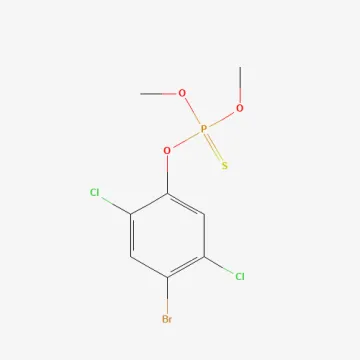
Bromophos
Description
Mode of action
Bromophos belongs to the class of organophosphorus compounds (OPs), which are widely utilized as broad-spectrum insecticides and acaricides.
The primary mode of action is the inhibition of the enzyme acetylcholinesterase within the insect's nervous system, disrupting nerve impulse transmission.
The resulting accumulation of acetylcholine in the synaptic cleft causes continuous neural stimulation, leading to paralysis and eventual death.
The substance exhibits both contact and stomach activity, making it effective against pests through direct exposure or consumption of treated plant tissue.
It is capable of penetrating the insect cuticle rapidly, which provides an efficient knockdown effect shortly after application in the field.
What it targets
Bromophos is used to control a variety of chewing and sucking pests that threaten vegetable, fruit, and various field crops.
It is particularly effective against different species of aphids that damage plant vitality by extracting essential cell sap.
The substance is also employed to manage populations of lepidopteran larvae that consume foliage and can significantly reduce overall harvest yields.
Its efficacy extends to mite control, which is crucial for maintaining plant health in warm and arid climates where mite outbreaks are frequent.
- Various aphid species;
- Leaf-eating caterpillars;
- Spider mites and their larvae.
Rates and timing
Application rates for the product are determined by the specific crop type, the pest pressure level, and the growth stage of the plants.
Treatment should ideally be performed during the early stages of pest infestation when larvae or adults are most vulnerable to chemical exposure.
Thorough coverage of all plant surfaces, particularly the underside of leaves, is necessary to achieve the desired protective result.
The time intervals between the last application and harvesting must be strictly adhered to according to established safety regulations for each crop.
Monitoring environmental conditions is essential, as the degradation rate of the active ingredient may vary with temperature and UV light exposure.
Restrictions
Bromophos is a toxic compound, requiring the use of full personal protective equipment for handlers and applicators at all times.
Application must be avoided during the flowering period of crops or nearby weeds to prevent the poisoning of bees and other beneficial pollinators.
Over-reliance on this insecticide can lead to the development of pest resistance, so it should be used in rotation with other chemical classes.
Proper storage is mandatory, ensuring the product is kept in a secure, well-ventilated location away from children, animals, and food supplies.
Precautions should be taken to prevent any runoff into waterways, as the substance poses a significant risk to aquatic organisms and ecosystems.
Status in the European Union
Not approved in the EU
- CAS number
- 2104-96-3
- Category (EU)
- IN - Insecticide
- ADI
- 0.04 mg/kg bw/day
EU status is for reference only and does not replace national registration in your country.