
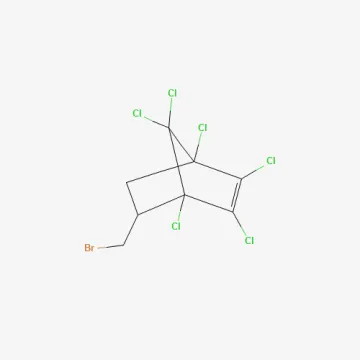
Bromocyclen
Description
Mode of action
Bromocyclen belongs to the class of organochlorine compounds characterized by significant insecticidal activity. Chemically, it is a polycyclic halogenated hydrocarbon, a structure that imparts high lipophilicity, allowing it to easily penetrate the chitinous exoskeletons of insects.
The mode of action of this substance involves the disruption of nerve impulse transmission within the pest's organism. Bromocyclen interacts with ion channels in nerve cells, inducing persistent membrane depolarization, which leads to paralysis and the eventual death of the insect.
The compound operates primarily through contact and ingestion. Therefore, to effectively control pest populations, it is crucial to ensure thorough coverage of the plant's vegetative parts or the soil surface where the target insects reside.
A key feature of this compound is its prolonged residual effect. Due to the chemical stability of the molecule, bromocyclen can remain toxic to pests for an extended period following application.
However, because of the risk of accumulation in soil and environmental components, the use of this substance group has been significantly restricted or banned in many countries under modern safety regulations.
What it targets
Bromocyclen was traditionally used to combat a wide spectrum of harmful insects in various agro-ecosystems. Its effectiveness has been demonstrated in controlling Lepidoptera, Coleoptera, and certain species of Orthoptera pests.
The substance held particular importance in protecting technical and cereal crops from pests that inhabit the topsoil layer or damage young seedlings. It was also utilized for the disinfestation of warehouses and for controlling household insects.
The range of applications included the control of soil-dwelling pests, such as white grub larvae and wireworms. The substance effectively reduced the density of phytophages that damage the root systems of developing plants.
Due to its high fumigant capacity under specific conditions, bromocyclen was used to treat seeds and tubers before storage, protecting them from infestations by grain weevils and moths.
Activity against sap-sucking pests (thrips, aphids) was generally lower compared to contact organophosphorus agents, which is why it was most often used in combination with other active ingredients in tank mixes.
Restrictions
The primary constraint when handling bromocyclen is its high toxicity to beneficial entomofauna, including bees and natural pest predators. Applications are strictly prohibited during the active flowering phase of nectar-producing plants.
The preparation has a marked propensity for bioaccumulation in food chains; therefore, its use on crops intended for fresh consumption close to harvest is not permitted.
Sanitary buffer zones must be strictly maintained when treating fields located near water bodies. Bromocyclen is highly toxic to fish and other aquatic organisms, requiring the prevention of wind drift towards water surfaces.
Handling this substance requires the use of complete personal protective equipment (PPE), including respirators, chemical-resistant suits, and gloves. Contact with skin or inhalation of vapors can cause severe poisoning in operators.
Adherence to pre-harvest intervals and re-entry intervals for manual or mechanized labor is a mandatory requirement to prevent personnel exposure and poisoning.
Status in the European Union
Not approved in the EU
- CAS number
- 1715-40-8
- Category (EU)
- IN - Insecticide
EU status is for reference only and does not replace national registration in your country.