
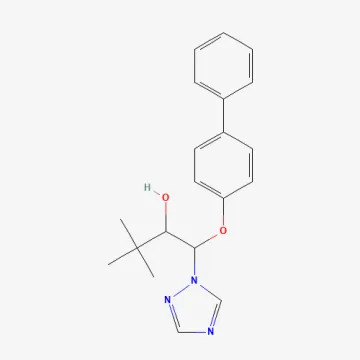
Bitertanol
Description
Mode of action
Bitertanol belongs to the triazole chemical class and is a systemic fungicide with a broad spectrum of protective and curative activity. The substance actively penetrates plant tissues after application, ensuring long-lasting protection of the crop's vegetative parts.
The mechanism of action is based on the inhibition of ergosterol biosynthesis in fungal pathogen cells. Ergosterol is a key component of fungal cell membranes, and disrupting its synthesis leads to irreversible changes in membrane structure, cessation of mycelial growth, and spore death.
The product is capable of being rapidly absorbed by the green parts of plants, which minimizes the washing off of the active ingredient by precipitation. Such systemic activity allows for the protection of not only already formed leaves but also those that appear shortly after treatment.
Bitertanol is often used in preventive treatment programs to prevent primary pathogen infection. Under conditions of developing infection, the substance shows a pronounced curative effect, stopping the further spread of the disease.
Due to its chemical structure, the compound is characterized by moderate phytotoxicity, which, when regulations are followed, allows for safe application at sensitive growth stages of fruit and vegetable crops.
What it targets
The primary use of bitertanol is the control of fungal disease complexes in industrial fruit growing and vegetable production. The product is particularly effective against various types of scab on pome fruit crops.
The spectrum of action includes the suppression of a wide list of infections:
- Apple and pear scab
- Powdery mildew on fruit trees
- Monilinia fruit rot
- Brown rust of cereals
- Various leaf spot diseases
Thanks to its systemic properties, the substance works effectively against fruit and shoot infections, preventing premature leaf fall and crop spoilage.
The fungicide is of particular importance in combating pathogens that develop in the high-humidity conditions characteristic of spring and early summer.
With correct dosage selection, bitertanol allows for reducing the level of the infectious background in the area, which is critical for perennial plantations.
Rates and timing
Bitertanol application rates depend on the crop type, level of infestation, and the climatic conditions of the specific region. On average, the concentration of the working solution varies within 0.25–0.5 kg of active ingredient per hectare.
Timing of treatment is tied to plant growth stages. The first sprayings are recommended during the bud burst period or immediately after flowering to protect young fruits from primary scab infection.
The interval between treatments is usually 10–14 days, depending on the intensity of infection development and weather conditions. In cases of epiphytotic disease outbreaks, intervals may be shortened.
To prepare the working solution, the product must first be dissolved in a small amount of water, after which the volume should be brought to the required level under constant stirring.
It is important to ensure uniform coverage of the leaf surface, as systemic action requires high-quality contact between the product and the plant for optimal absorption.
Restrictions
When using bitertanol, it is necessary to strictly observe personal protection measures: wear protective clothing, respirators, and gloves to prevent contact with skin and mucous membranes.
The product belongs to substances that require adherence to pre-harvest intervals. Treatment should not be performed 20–30 days before the planned harvest to ensure produce safety.
It is not recommended to perform treatments during periods of high activity of bees and other pollinators. Also, drift of the product to neighboring sensitive crops during strong gusts of wind should be avoided.
Prolonged use of products from one group (triazoles) can lead to the development of resistance in pathogens. It is recommended to rotate the use of bitertanol with fungicides of other classes.
Residual working solutions and containers must be disposed of in accordance with current legislation, preventing them from entering open water bodies and sources of drinking water.
Status in the European Union
Not approved in the EU
- CAS number
- 55179-31-2
- Category (EU)
- FU - Fungicide
- Approved from
- 01.01.2012
- Approval until
- 29.08.2013
- ADI
- 0.003 mg/kg bw/day
- ARfD
- 0.01 mg/kg bw
- AOEL
- 0.01 mg/kg bw/day
EU status is for reference only and does not replace national registration in your country.