
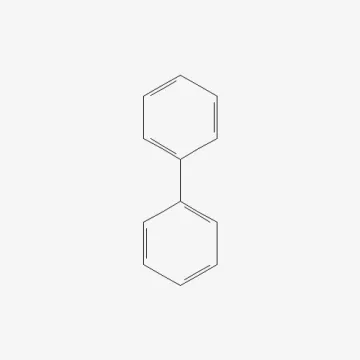
Biphenyl
Description
Mode of action
Biphenyl is an aromatic hydrocarbon used in agriculture primarily as a fungistatic agent for post-harvest protection. Its main function is to inhibit the metabolic processes of pathogenic fungi that degrade stored agricultural produce.
The mechanism of action involves disrupting the integrity of the fungal cell membranes. Biphenyl penetrates the spores and mycelium of fungi, blocking their growth and reproductive capabilities, which effectively prevents the spread of decay within stored fruit batches.
The compound acts primarily through contact. Consequently, its efficacy is entirely dependent on the uniformity of application over the treated surface. It forms a chemical barrier that makes the environment unsuitable for fungal infection.
Biphenyl exhibits high specific activity against a wide range of decay-causing pathogens. It is particularly effective when applied preventively, suppressing spore germination before the fungus can penetrate the fruit tissue.
Utilizing this substance significantly reduces crop losses during long-term storage and transportation. It is often employed in the form of treated packaging materials, such as wrapping paper or liners, providing a sustained protective effect.
What it targets
Biphenyl is widely used to protect citrus fruits, including oranges, mandarins, grapefruits, and lemons. It is essential for ensuring the quality of produce intended for long-distance transport.
The primary targets are fungi of the Penicillium genus, most notably Penicillium digitatum (green mold) and Penicillium italicum (blue mold), which are the most common causes of decay in storage.
The application of this fungicide helps prevent the development of anthracnose and other surface lesions caused by micro-abrasions that occur during harvesting, sorting, and packaging processes.
Biphenyl is not intended for field application on growing crops. Its use is strictly limited to post-harvest treatment to manage fungal decay after the produce has been gathered from the field.
It remains a valuable tool in anti-resistance management, as it can control strains of fungi that have developed resistance to other classes of systemic fungicides, thereby protecting the value of stored goods.
Rates and timing
Usage rates of Biphenyl are strictly regulated by international food safety standards. Each region establishes specific Maximum Residue Levels (MRLs) for the substance allowed on food products before they reach the market.
Treatment is typically performed through dipping, spraying, or the use of impregnated packaging. The concentration of the active ingredient must be precisely calibrated based on the specific commodity and the expected storage duration.
Strict adherence to exposure times and drying procedures is required before packaging the fruit. Improper application can result in chemical burns on the fruit peel, which significantly degrades the commercial appearance and marketability.
Waiting periods after treatment must be observed according to technical guidelines. This ensures that the residual concentration of the substance degrades to levels that comply with consumer safety regulations.
Operators should utilize certified application systems to ensure precision. Avoiding excessive application is crucial to maintain safety standards and economic efficiency during the post-harvest process.
Restrictions
Working with Biphenyl requires the use of personal protective equipment. Staff must protect their respiratory system, eyes, and skin from contact, as the substance can cause irritation and health issues if mishandled.
The use of Biphenyl in field conditions for spraying growing plants is strictly prohibited. Such actions pose risks to the ecosystem and violate food safety protocols regarding pesticide usage.
Produce treated post-harvest must undergo laboratory monitoring to verify that residue levels remain within legal limits. Regular testing is a mandatory step in the supply chain to ensure consumer protection.
The product must be stored in well-ventilated, secure areas away from food, animal feed, and ignition sources. The substance possesses a distinct odor that can be absorbed by other materials if storage conditions are not met.
Waste disposal must follow local environmental regulations for toxic substances. Discharging residues into sewage systems or natural water bodies is prohibited due to the potential ecological impact of the compound.
Status in the European Union
Not approved in the EU
- CAS number
- 92-52-4
- ADI
- 0.038 mg/kg bw/day
- ARfD
- Not appl.
EU status is for reference only and does not replace national registration in your country.