
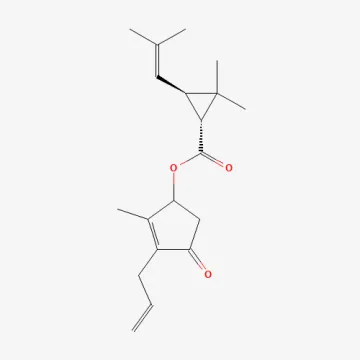
Bioallethrin
Description
Mode of action
Bioallethrin belongs to the first-generation synthetic pyrethroids. It acts as a contact insecticide targeting the nervous system of insects.
The substance disrupts the permeability of cell membranes to sodium ions, leading to nerve transmission failure in target organisms.
This results in rapid paralysis, often referred to as the knockdown effect, which prevents insects from causing further damage to plants.
Bioallethrin is known for its high speed of action, providing immediate results against infestations of various agricultural pests.
The compound is susceptible to degradation by UV light and high temperatures, ensuring minimal long-term residue in the environment.
What it targets
Products containing bioallethrin are effective against a wide range of flying and crawling pests in both agricultural and domestic settings.
It is commonly used to control flies, mosquitoes, cockroaches, bed bugs, and certain species of Lepidoptera affecting vegetable crops.
The insecticide is highly effective in greenhouse environments where rapid pest population reduction is required.
Bioallethrin is frequently included in formulated mixtures with other insecticides to improve the knockdown capability of the product.
It effectively targets adult insect stages, helping to break the life cycle of the pest and stabilize crop health.
Rates and timing
Application rates for bioallethrin depend on the specific formulation, such as aerosols or emulsifiable concentrates, and the pest density.
Applications should be made under dry, calm weather conditions to ensure maximum coverage of plant surfaces or insect habitats.
Pre-harvest intervals are typically short due to the rapid breakdown of the active ingredient in the field.
The frequency of application is strictly regulated by product labels to prevent the development of pesticide resistance in pest populations.
When mixing with other agents, a physical compatibility test is necessary to ensure the stability of the spray solution.
Restrictions
Bioallethrin is highly toxic to bees and other beneficial pollinators, so applications during flowering stages are strictly prohibited.
The substance is harmful to aquatic life, requiring significant caution when spraying near water sources or ponds.
Personnel handling the product must wear appropriate personal protective equipment to avoid skin, eye, and respiratory exposure.
Avoid exceeding the recommended dosage to prevent potential phytotoxicity, especially on sensitive or young plant varieties.
Store the product in its original, sealed container in a cool, dry place away from food, animal feed, and children.
Status in the European Union
Not approved in the EU
- CAS number
- 260359-57-7
- Category (EU)
- IN - Insecticide
EU status is for reference only and does not replace national registration in your country.