
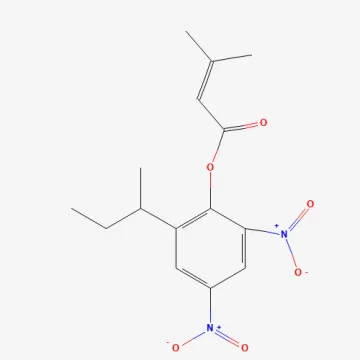
Binapacryl
Description
Mode of action
Binapacryl belongs to the dinitrophenol class of chemicals and has been historically utilized as an effective active ingredient for protecting crops from pests and diseases.
The primary mechanism of action involves the uncoupling of oxidative phosphorylation in the mitochondria of target organisms, effectively cutting off their cellular energy supply.
It acts primarily through contact, which requires thorough coverage of plant surfaces during application to ensure the substance reaches the pests or fungal spores effectively.
Beyond its acaricidal properties against mites, the compound also demonstrates antifungal activity, which helps in suppressing the development of various powdery mildew pathogens.
Due to its lack of systemic activity, it provides a persistent protective layer on the plant surface, preventing re-infestation or re-infection until washed off or degraded.
What it targets
Binapacryl is primarily used in fruit and berry orchards to control populations of spider mites, which can cause significant damage to foliage and fruit quality.
It is also highly effective against powdery mildew, a fungal disease that affects a wide range of horticultural crops, including apples and grapes.
The substance targets mobile life stages of mites, helping growers to maintain population levels below economic damage thresholds.
By combining insecticidal and fungicidal properties, it serves as a versatile tool for integrated pest management programs in various agricultural settings.
Effective management requires identifying the optimal application timing based on the lifecycle of the pests and the environmental conditions affecting disease spread.
Rates and timing
Application rates for Binapacryl are strictly dictated by the specific crop type, the stage of infestation, and the intended level of control required for the season.
Treatments are typically applied during the early stages of pest emergence or at the first signs of fungal development to prevent rapid outbreaks.
Professional calibration of spraying equipment is essential to achieve a uniform application that minimizes waste and ensures maximum efficacy across the entire field.
Repeat treatments should be planned according to the residual activity of the chemical and the specific pest pressure observed in the orchard or field.
Care must be taken to follow the manufacturer's label instructions regarding water volumes and dilution rates to ensure safe and compliant application.
Restrictions
Handling Binapacryl requires rigorous safety protocols, including the use of protective clothing and respirators, due to its inherent toxicity to humans.
The compound is hazardous to bees and beneficial insects; therefore, application during flowering or periods of pollinator activity is strictly prohibited.
There is a documented risk of resistance development among mite populations, necessitating the rotation of Binapacryl with other chemical classes to maintain efficacy.
Environmental toxicity, particularly to aquatic life, necessitates strict buffer zones near water bodies to prevent runoff and ecological contamination.
Many jurisdictions have restricted or phased out the use of Binapacryl due to regulatory changes focused on environmental safety and health risks.
Status in the European Union
Not approved in the EU
- CAS number
- 485-31-4
EU status is for reference only and does not replace national registration in your country.