
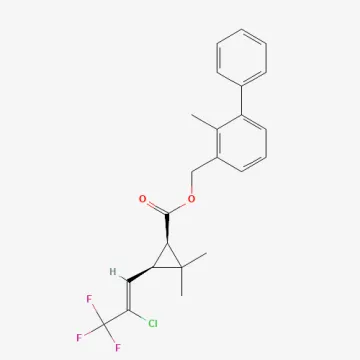
Bifenthrin
Description
Mode of action
Bifenthrin belongs to the chemical class of second-generation synthetic pyrethroids. Unlike many other pyrethroids, it exhibits both insecticidal and acaricidal activity, making it a versatile tool for controlling various agricultural pests.
The mode of action involves disrupting the nervous system of pests by interfering with sodium channel function. It keeps sodium channels open, causing repetitive firing of nerve impulses, leading to paralysis and death.
It acts primarily through contact and ingestion. The molecule is highly lipophilic, which helps it adhere to plant surfaces and resist wash-off from rainfall, providing an extended period of protection.
Bifenthrin is not systemic in plants. Therefore, successful pest control relies on achieving thorough coverage of the target foliage or the pest itself during application.
It is valued for its rapid knockdown effect, which allows farmers to quickly reduce pest populations that are causing immediate economic damage to their crops.
What it targets
Bifenthrin is effective against a wide range of pests, including lepidopterans, coleopterans, homopterans, and various species of phytophagous mites that often plague field and fruit crops.
In field crops, it is widely used to manage pests such as aphids, leafminers, and various beetle species on corn, cereals, soybeans, and cotton. It is particularly effective in preventing damage to foliage and developing seeds.
In horticulture, it is a critical component for controlling spider mites, whiteflies, and thrips on vegetables, ornamental plants, and tree fruits, where mite management is often challenging.
The broad spectrum of activity makes it a common choice for integrated pest management programs, especially when targeting complex pest infestations in dense crop canopies.
It has demonstrated efficiency against pests that have developed resistance to other insecticide classes, provided that resistance management strategies are implemented correctly.
Rates and timing
The application rate of bifenthrin depends on the target pest, the crop type, and the severity of the infestation. It is crucial to follow the label specifications to ensure the product is applied at the correct dosage per hectare.
Applications should be timed based on economic thresholds. Scouting the fields for the presence of early-stage larvae or adult pests is essential for determining the optimal window for spraying.
For best results, applications should be performed when weather conditions are stable. Very high temperatures can sometimes reduce the efficacy of pyrethroids, so morning or evening treatments are generally preferred.
Resistance management is vital. Users should rotate bifenthrin with other insecticides possessing different modes of action to prevent the development of resistant pest populations.
The water quality used for the spray tank should be monitored; alkaline water can lead to the hydrolysis of the active ingredient, significantly decreasing its efficacy on the target pests.
Restrictions
Bifenthrin is highly toxic to bees and aquatic organisms. It should never be applied during blooming periods or when bees are actively foraging in the area to protect pollinator health.
Strict buffer zones must be maintained when spraying near water bodies, streams, or ditches to prevent contamination, as the chemical can be lethal to fish and aquatic invertebrates.
Personal Protective Equipment (PPE) is mandatory during handling and application. Workers must wear appropriate gear to protect skin, eyes, and the respiratory system from potential exposure.
Pre-harvest intervals (PHI) must be strictly observed. These intervals are established to ensure that residues on the final agricultural product remain within safe legal limits for human consumption.
Always store the product in its original container, in a cool, dry place away from direct sunlight, out of reach of children, and separated from fertilizers, seeds, and food supplies.
Status in the European Union
Not approved in the EU
- CAS number
- 82657-04-3
- Category (EU)
- IN - Insecticide
- Approved from
- 01.08.2012
- Approval until
- 31.07.2019
- ADI
- 0.015 mg/kg bw/day
- ARfD
- 0.03 mg/kg bw
- AOEL
- 0.0075 mg/kg bw/day
EU status is for reference only and does not replace national registration in your country.