
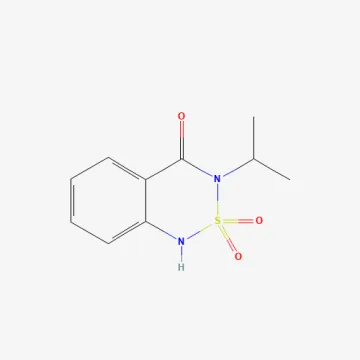
Bentazone
Description
Mode of action
Bentazone is a selective contact herbicide belonging to the benzothiadiazinone chemical class. Its main function is the inhibition of photosynthesis in susceptible plants.
The active ingredient penetrates weeds primarily through the leaf surface. Inside the plant, it blocks electron transport in the photosynthesis II process, which leads to immediate growth cessation.
After absorption, weeds stop competing with crops for water, light, and nutrients almost immediately after application.
Complete death of unwanted vegetation occurs within 7–14 days after spraying. The speed of action directly depends on temperature conditions and the developmental stage of the weeds.
The selectivity of bentazone is due to the ability of crop plants, such as soybeans or peas, to quickly metabolize the substance into inactive compounds, whereas weeds cannot do this.
What it targets
Bentazone effectively eliminates a wide spectrum of broad-leaved weeds that are frequently found in pulse crops and several other agricultural plants.
The product exhibits high activity against such hard-to-kill species as:
- Amaranthus retroflexus;
- Chenopodium album;
- Polygonum species;
- Solanum nigrum;
- Ambrosia artemisiifolia.
It is important to note that bentazone has almost no effect on grass weeds, which is why it is often used in tank mixtures with graminicides.
The use of this product is justified in fields with a high level of broad-leaved weed infestation that are sensitive to contact action.
Rates and timing
Application rates vary depending on the crop type, the level of field infestation, and the growth stage of the weeds at the time of application.
The standard dosage ranges from 1.5 to 3.0 liters of product per hectare. The best effect is achieved when spraying during the cotyledon to two-true-leaf stage of the weeds.
For high-quality field coverage, it is important to use an sufficient volume of working solution — at least 200–300 liters per hectare to ensure proper leaf contact.
It is recommended to apply the product at air temperatures between +15°C and +25°C. At lower temperatures, effectiveness decreases because physiological processes in weeds slow down.
Treatment is not recommended if the crop is under stress caused by drought, frost, or pest damage.
Restrictions
When working with bentazone, it is mandatory to strictly follow safety protocols and use personal protective equipment for the respiratory system, skin, and eyes.
The product is considered to have moderate toxicity to humans; however, it requires adherence to regulations regarding the protection of bees and other beneficial insects within the treatment area.
There are limitations regarding crop rotation: the active substance has a short half-life in the soil, which usually does not interfere with the sowing of subsequent crops.
Spraying should not be conducted immediately before rain, as moisture can wash the product off the leaves before it is fully absorbed by the plant.
The herbicide should be stored in its original container in a cool, dry place out of reach of children and animals, away from food and feedstuffs.
Status in the European Union
Approved in the EU
- CAS number
- 25057-89-0
- Approved from
- 01.06.2018
- Approval until
- 31.10.2027
- ADI
- 0.09 mg/kg bw/day
- ARfD
- 1.0 mg/kg bw
- AOEL
- 0.13 mg/kg bw/day
EU status is for reference only and does not replace national registration in your country.