
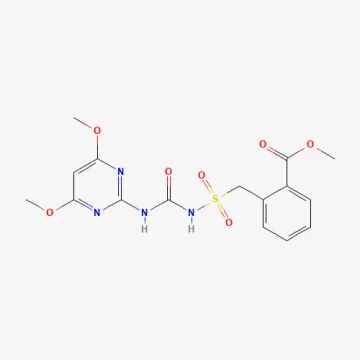
Bensulfuron-methyl
Description
Mode of action
Bensulfuron-methyl belongs to the sulfonylurea chemical class. It acts as a systemic herbicide, being absorbed by both the root system and the foliage of weeds.
The active ingredient inhibits the acetolactate synthase (ALS) enzyme, which is critical for the biosynthesis of essential branched-chain amino acids like valine, leucine, and isoleucine.
Inhibition of these amino acids leads to the rapid arrest of cell division in the meristematic tissues of target weeds, halting their growth immediately.
Chlorosis and necrosis appear within days of application, leading to the gradual death of the weeds over a period of two to three weeks.
Selective control is achieved because the crop, specifically rice, is capable of rapidly metabolizing the compound into non-toxic substances.
What it targets
The substance is primarily used for controlling a wide range of sedges and broad-leaved weeds in rice paddies.
Key weed targets include species such as Cyperus, Alisma, and Scirpus, which are common competitors in flooded rice fields.
It also provides suppression of certain annual grass weeds if applied during their early stages of growth.
Effective management of these targets helps reduce weed pressure during the critical initial weeks of rice establishment.
The chemical's high solubility allows for uniform distribution in the irrigation water, ensuring comprehensive coverage across the field.
Rates and timing
Application rates for bensulfuron-methyl typically range from 30 to 60 grams of active ingredient per hectare, depending on the specific weed spectrum and density.
The most favorable results are obtained when weeds are in their early growth stage, specifically at the 1–3 leaf stage.
Maintaining a standing layer of water in the rice paddy for at least 5–7 days following treatment is crucial for optimal efficacy and uniform herbicide distribution.
Optimal timing depends on field conditions and temperature, as warmer conditions can accelerate both the weed uptake and the crop's ability to metabolize the herbicide.
Tank mixtures with other herbicides are frequently employed to improve the overall control spectrum, particularly against resistant grass weeds.
Restrictions
Bensulfuron-methyl should not be used on soils with very low organic matter content to prevent the risk of phytotoxicity or leaching.
Spray drift must be strictly prevented, as nearby non-target crops may be highly sensitive to sulfonylurea herbicides.
Operators must adhere to strict personal protection protocols, wearing appropriate gear to prevent skin, eye, and respiratory exposure during mixing and application.
Environmental safety must be maintained; residues and equipment wash water must be handled carefully to prevent contamination of local water bodies.
Equipment used for application requires thorough cleaning after use to ensure no residues remain that could damage other crops in subsequent spraying operations.
Status in the European Union
Approved in the EU
- CAS number
- 83055-99-6
- Approved from
- 01.11.2009
- Approval until
- 15.08.2026
- ADI
- 0.2 mg/kg bw/day
- ARfD
- Not appl.
- AOEL
- 0.12 mg/kg bw/day
EU status is for reference only and does not replace national registration in your country.